Linear Transcendency
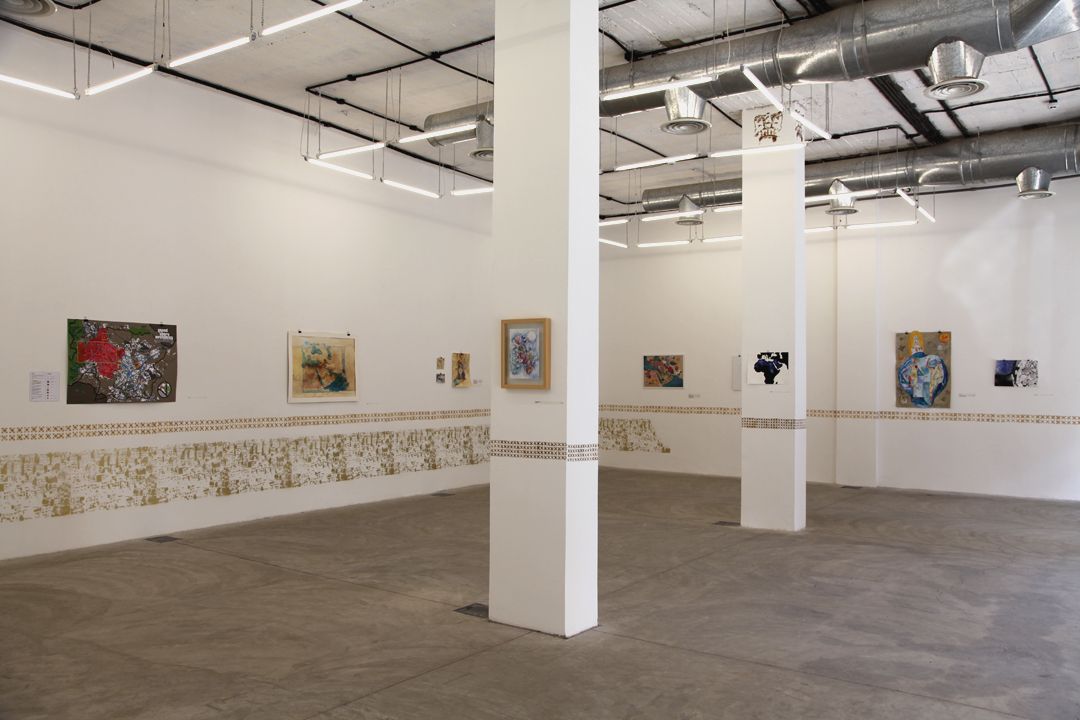
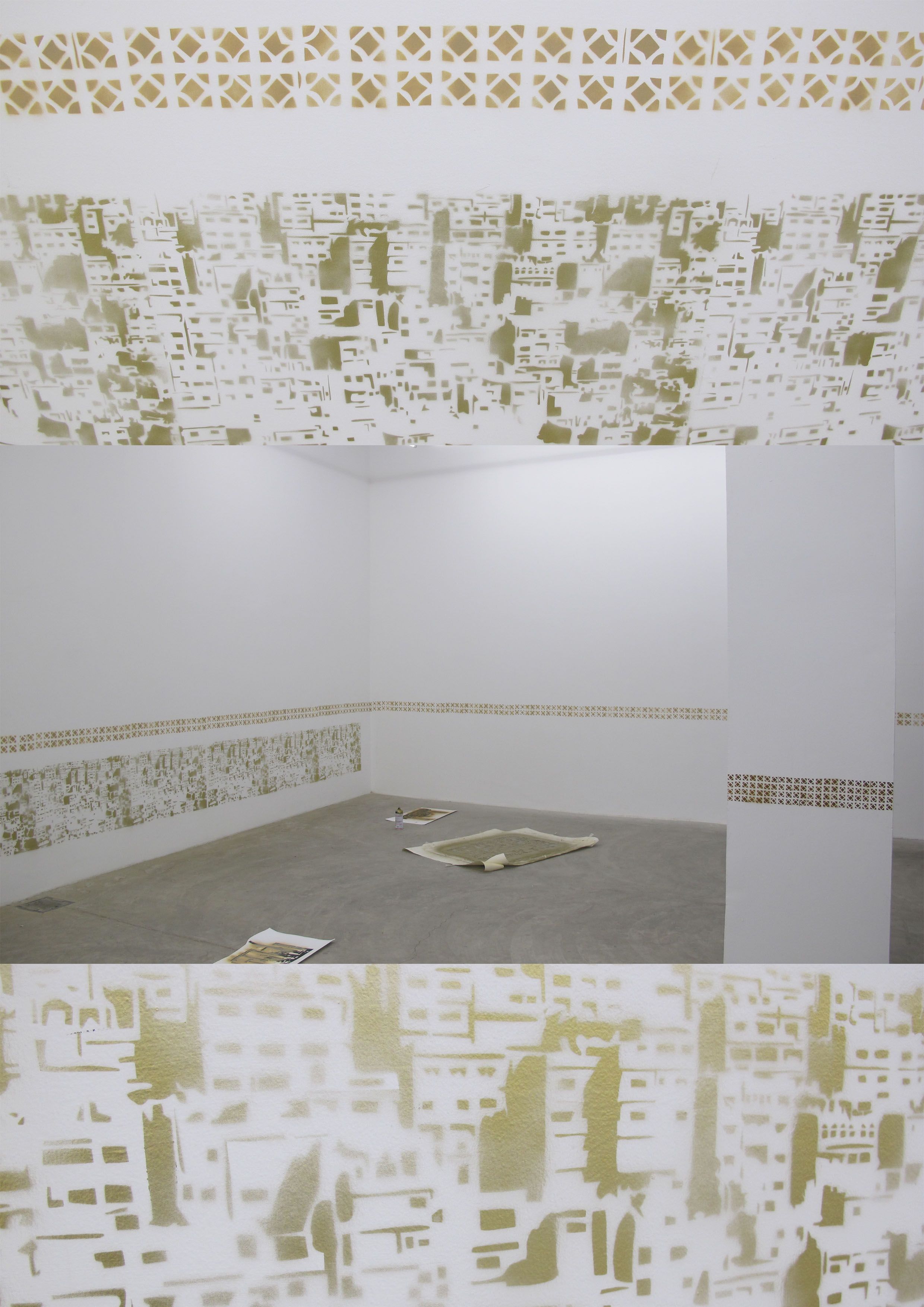
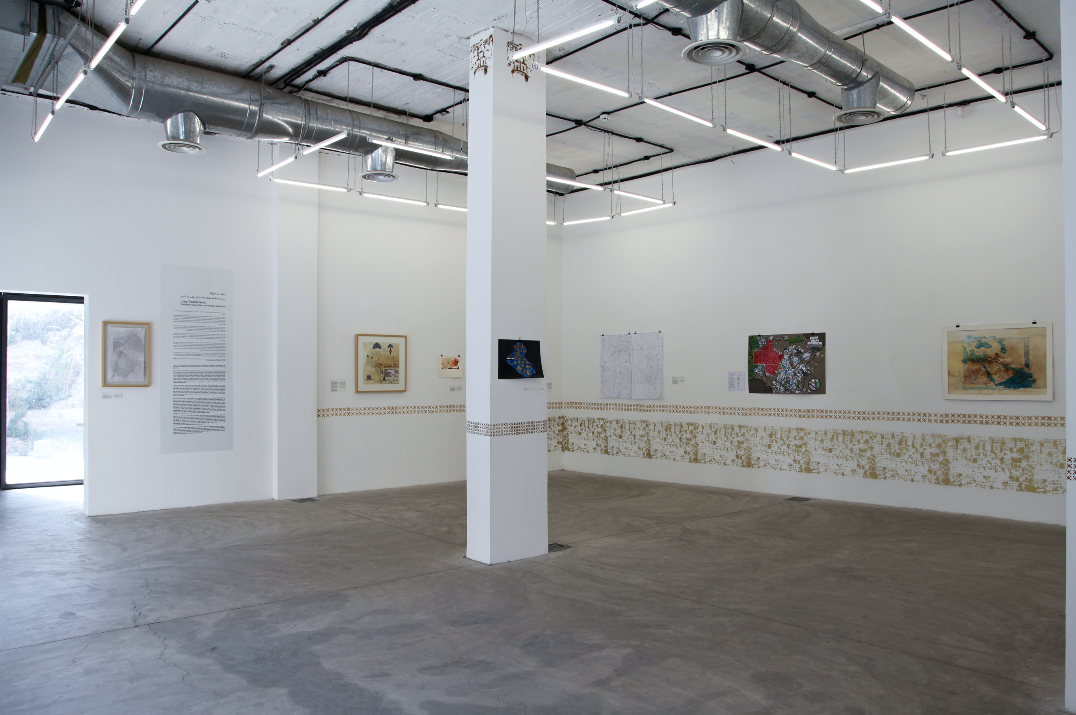
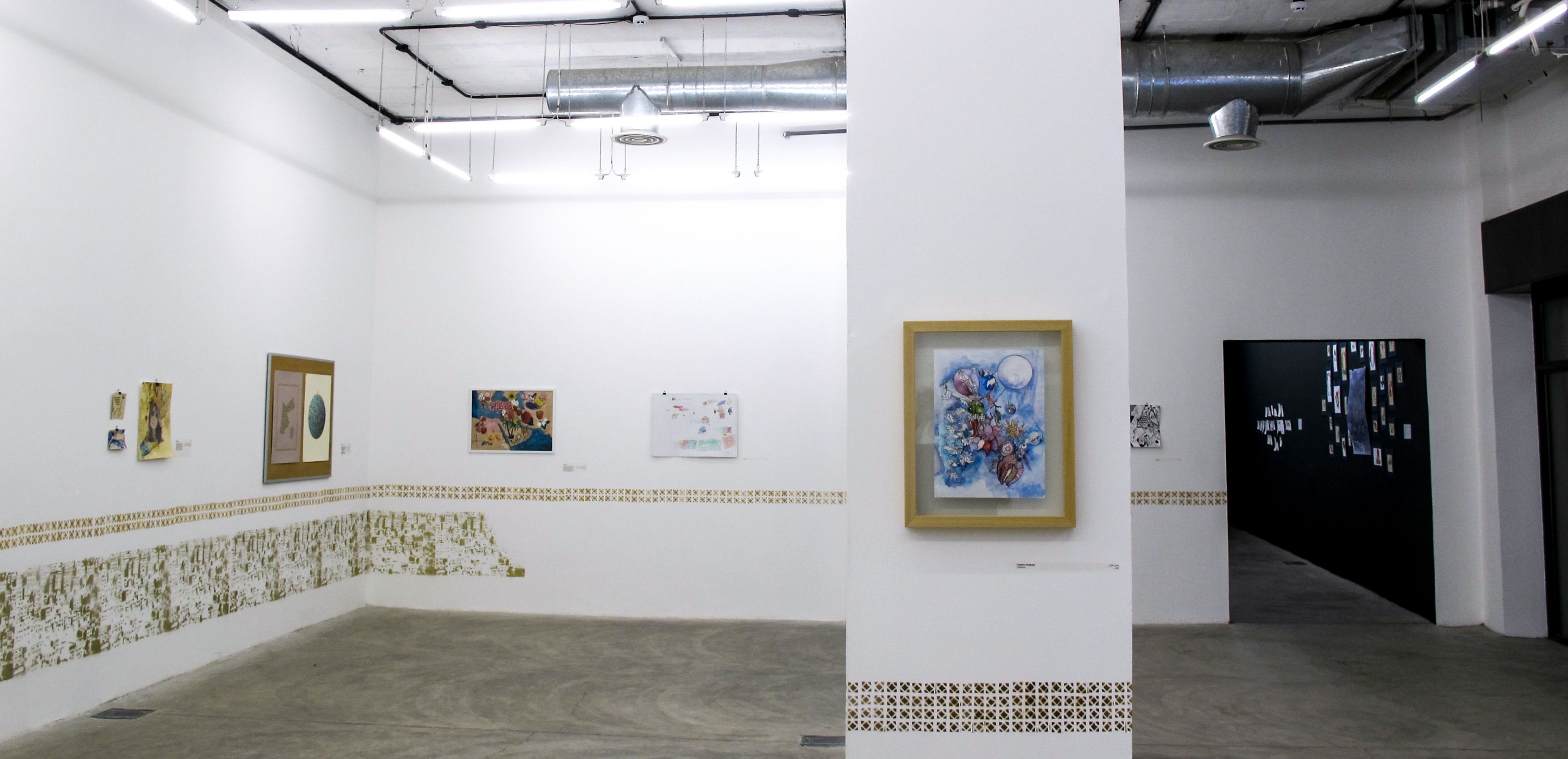
Ottoman Trophy, detail, t. watercolor on paper s. 35 x 60 cm, Darat al Funun presented Linear Transcendency, a collaborative exhibition by Cansu Çakar together with workshop participants. The project was initiated and developed by Bige Örer, Photos: Ali Yass Project Coordinator: Yasmine Alnabulsi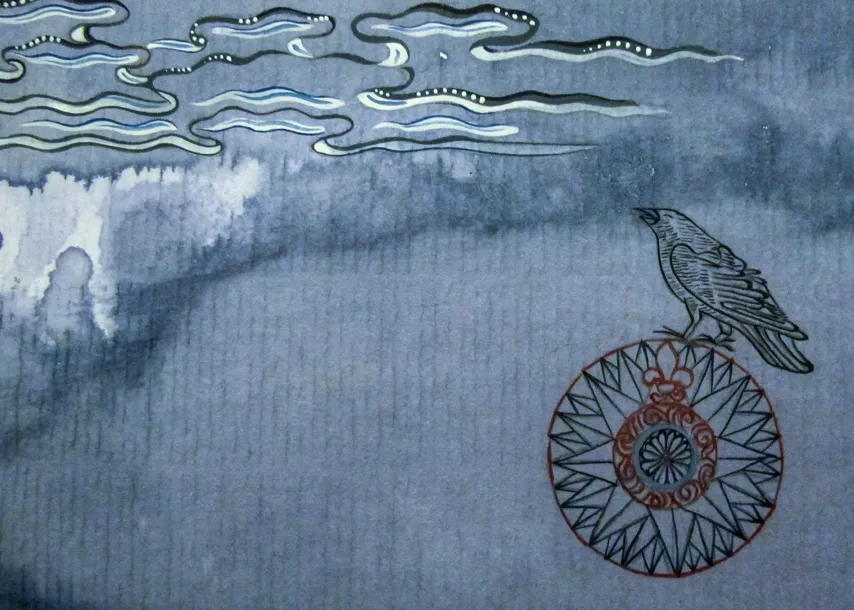
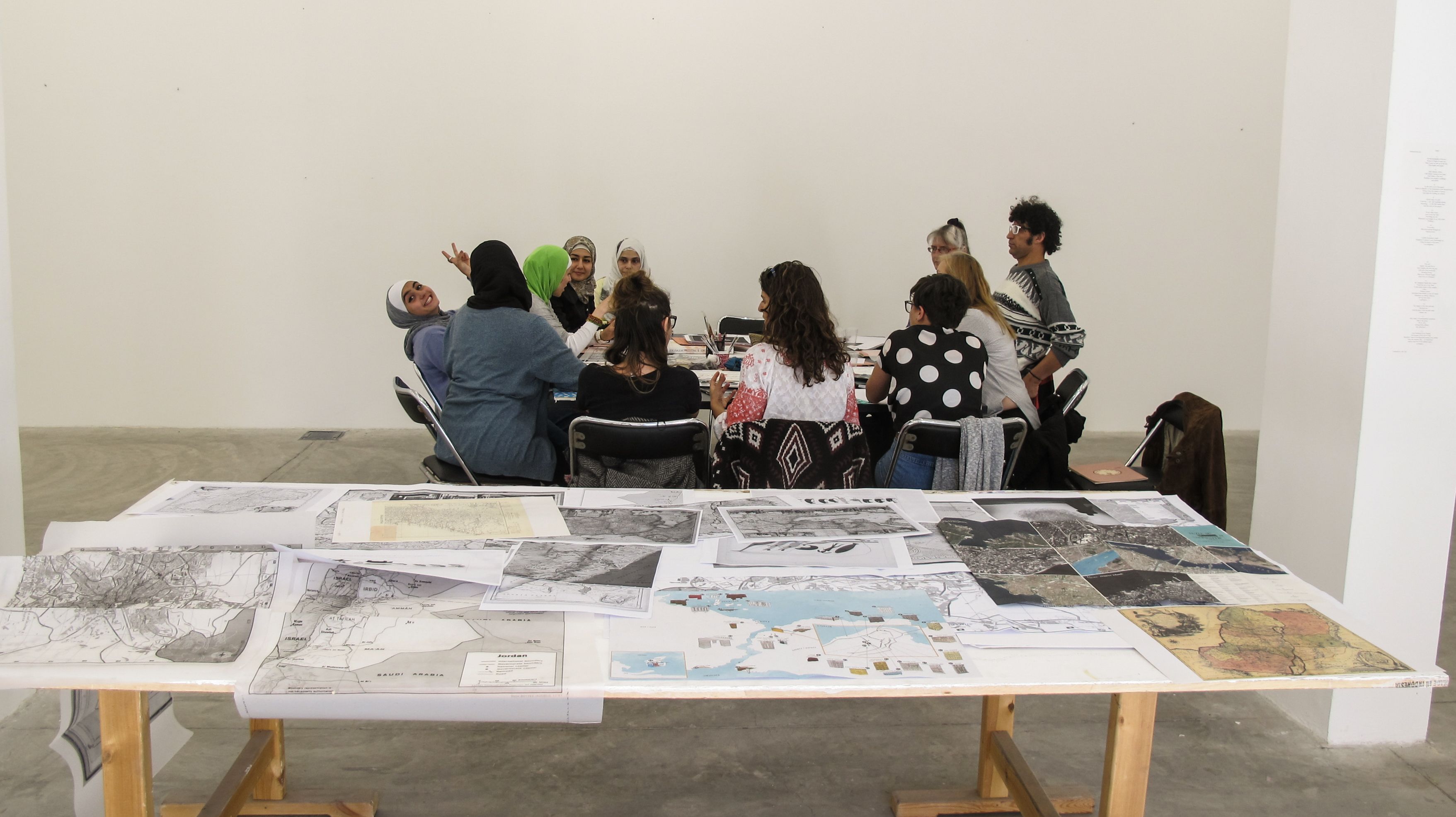
Çakar redefines the traditional format of miniature in her artistic practice. The process highlighted the act of working together and mapping different stories and destinations using miniature technique, which is traditionally commonly used in mapping. Workshop participants were invited to create maps for different purposes – maps drawing every day in the city, maps drawn to find the city they want to live in, local and international maps, or maps in which we can disregard any political, social, religious or economic constraints — using, but not limited to traditional mapping and ornamental techniques.
Cansu Çakar said; ‘What was and what made the border? The borders used to be rivers, mountains and seas. The color of the earth could change as it pleased, the rocks could move as they rolled. But which border is a mountain's or a river's in our day? The infinity in the space becomes more meaningless as we divide our tiny world with lines. We become more shallow and then we begin not to deserve infinity. We draw rough lines by means of paws of the civilization while as the Nature offers us all the answers with her kindness. A World where the crows could land on the whales must have been a dream, but for now, we can only dream of a world where there are no borders.’
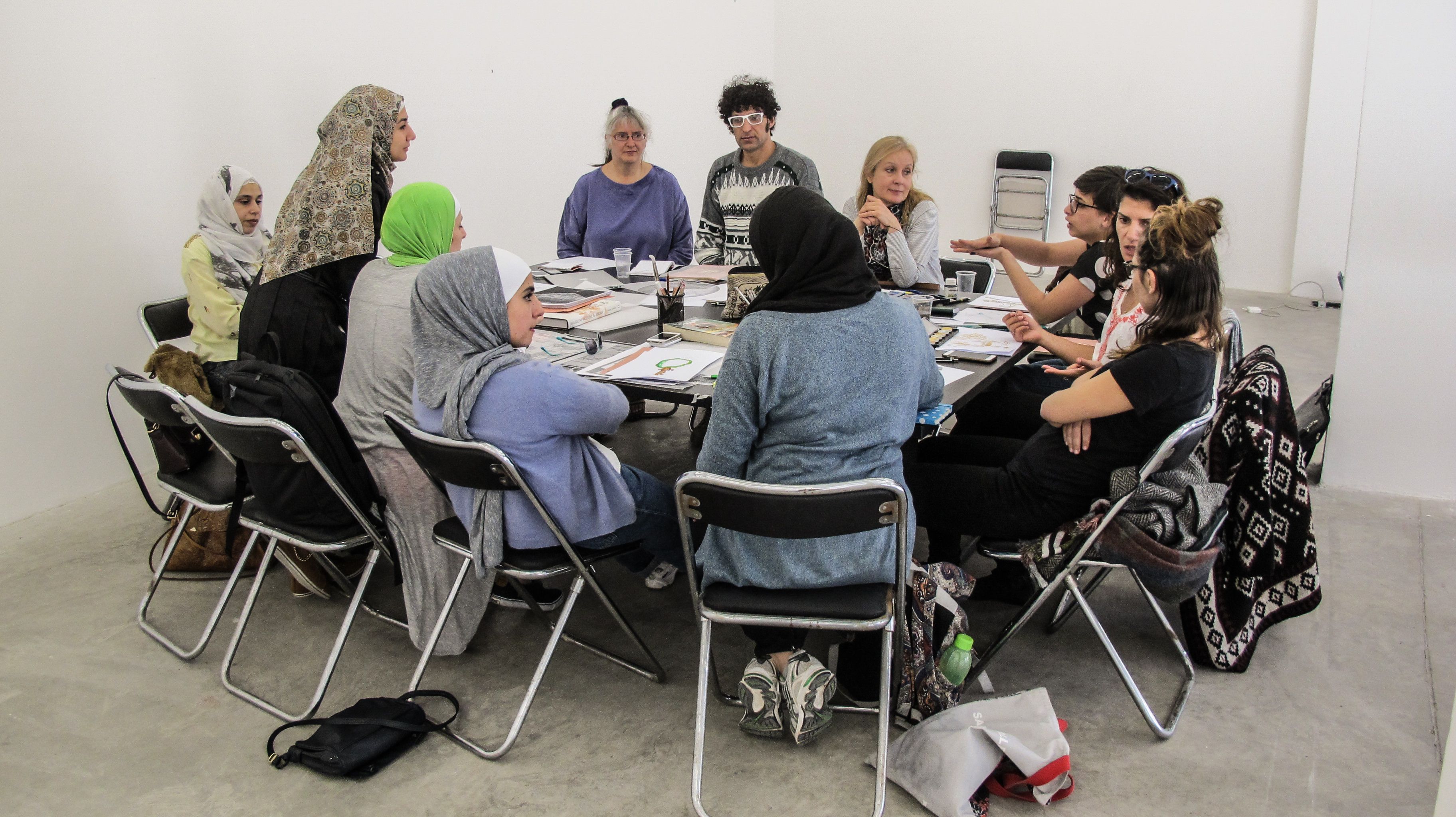
Running over the span of three weeks, the workshop 'Mapping Stories and Destinations' at Darat al Funun invited women from Zarqa, in cooperation with AYA for Consultancy & Development, the Khawla Bint Al Azwar Society and the Family Guidance and Awareness Center in Zarqa, and in cooperation with the UN Women Project "Support Gender Equality and Social Cohesion Efforts through Service Delivery in Jordan's Hosting Communities" funded by the government of Japan. Çakar also worked with visual arts students from the University of Jordan under the direction of the Head of the Fine Arts department, Jehad al Ameri, as well as several visiting schools and participating artists from various backgrounds, including Jane Mufti, Haifa Kader, Ruba Abushousheh, Brittany Barrineau, Majed Neaimi, Lugine Emad Hiary, Trisha Terwilliger, Areej Melhem, Suzanne Saoub, Yasmine Alkurdi, Bayan Mazen Homsi, Laith Demashqieh, and Hanin Dabbagh. This exhibition is a compilation of their collective stories.
20 April 2016, Darat al Funun presentation images about maps.pdf Amman map by Brittany Barrineau.pdf research metarials from Hisham Khatip Map Collection.pdf
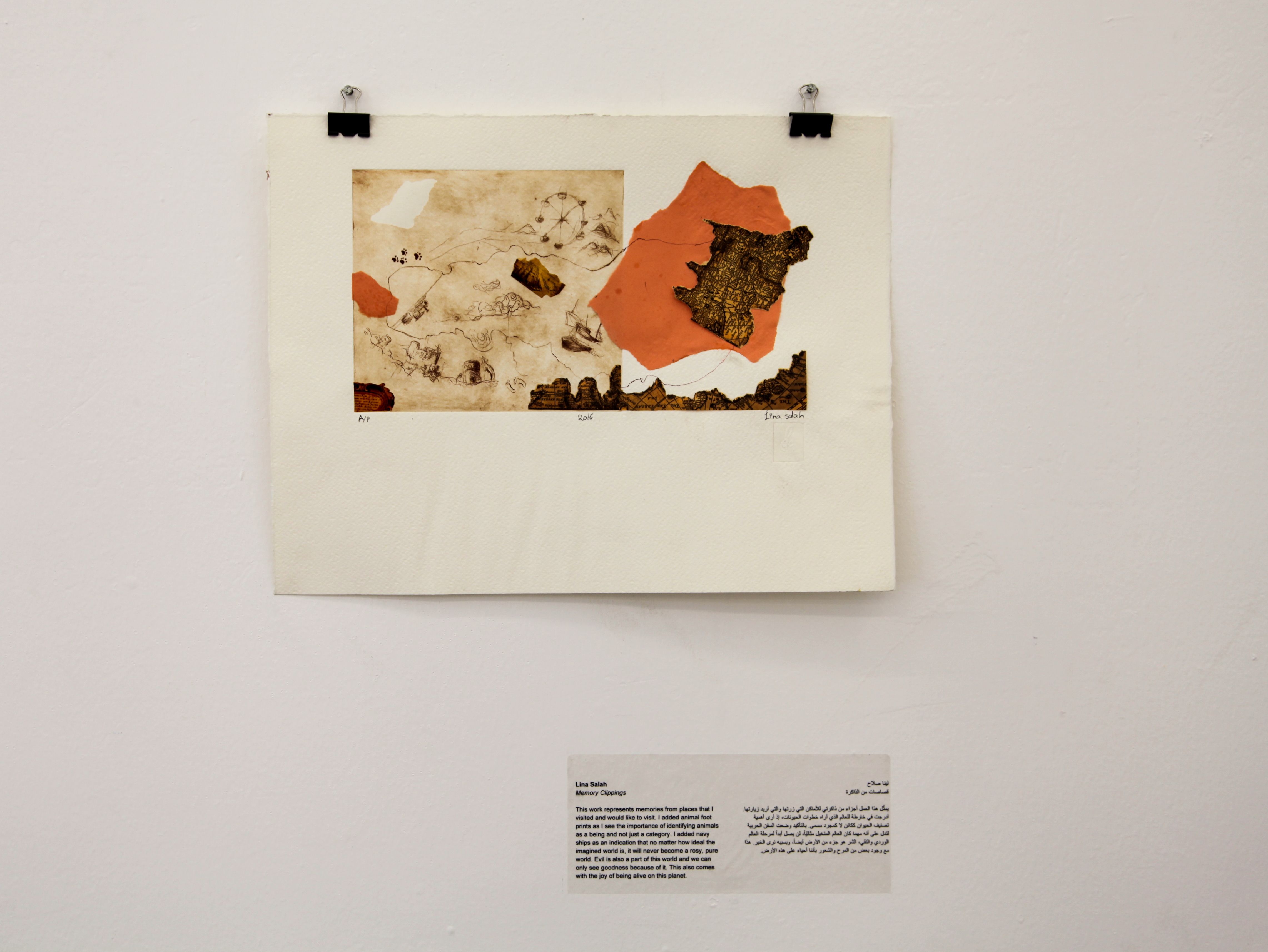 Lina Salah,
Memory Clippings
This work represents memories from places that I visited and would like to visit. I added animal foot prints as I see the importance of identifying animals as a being and not just a category. I added navy ships as an indication that no matter how ideal the imagined world is, it will never become a rosy, pure world. Evil is also a part of this world and we can only see goodness because of it. This also comes with the some joy for being alive on this planet.
Lina Salah,
Memory Clippings
This work represents memories from places that I visited and would like to visit. I added animal foot prints as I see the importance of identifying animals as a being and not just a category. I added navy ships as an indication that no matter how ideal the imagined world is, it will never become a rosy, pure world. Evil is also a part of this world and we can only see goodness because of it. This also comes with the some joy for being alive on this planet.
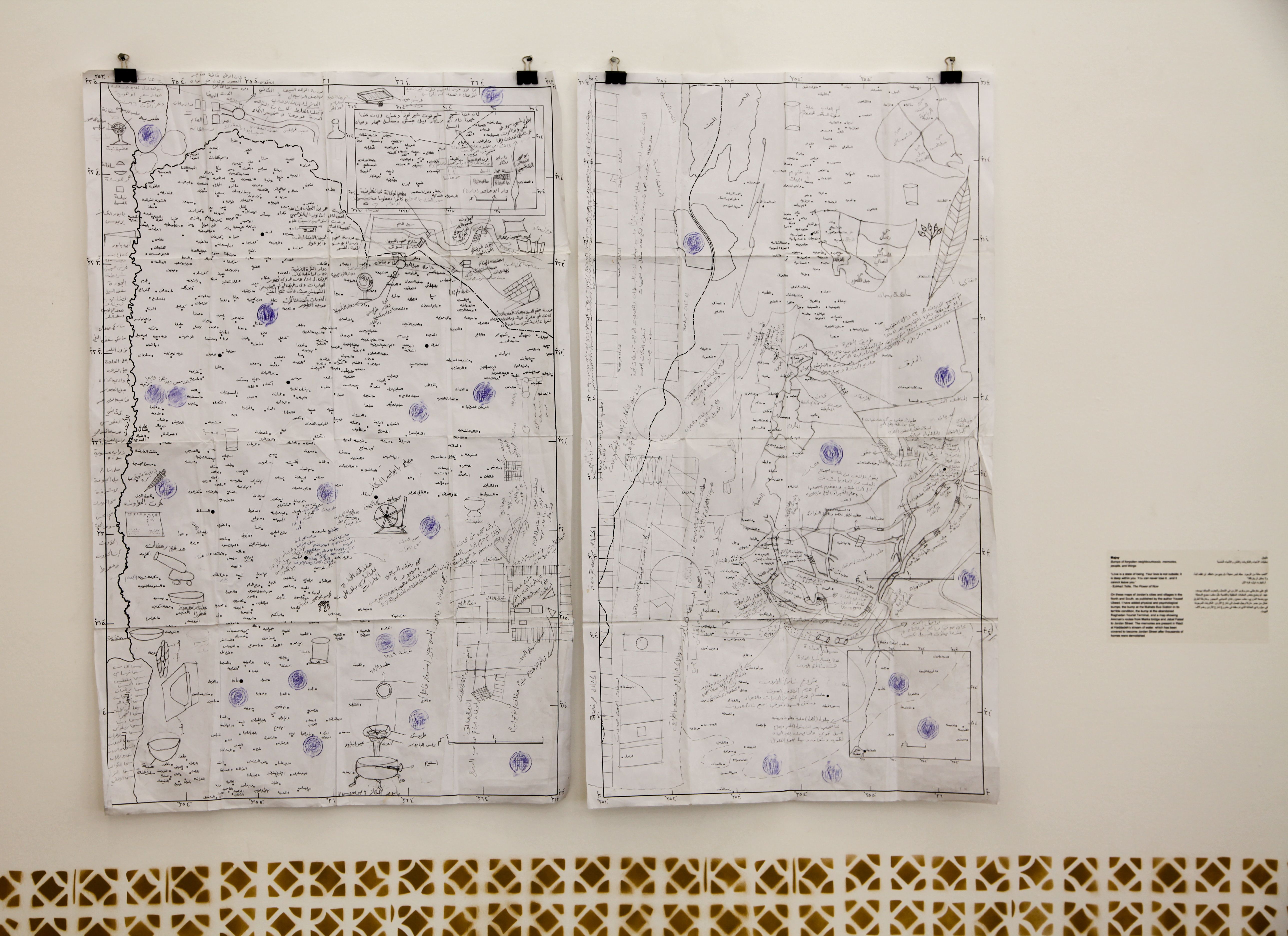 Majoy,
Bumps of forgotten neighbourhoods, memories, people, and things.
“Love is a state of being. Your love is not outside; it is deep within you. You can never lose it , and it cannot leave you.”
Eckhart Tolle, The Power of Now
On these maps of Jordan’s cities and villages in the North and South, as published by the author Yousef Ubeed, I have added physical and psychological bumps; the bump at the Mahata Bus Station in its terrible condition, the bump at the abandoned Raghadan Tourist Terminal, and a map showing Amman’s routes from Marka bridge and Jabal Faisal to Jordan Street. The memories are present in Wadi al Haddadeh’s stream of water, which has been covered to become Jordan Street after thousands of homes were demolished.
Majoy,
Bumps of forgotten neighbourhoods, memories, people, and things.
“Love is a state of being. Your love is not outside; it is deep within you. You can never lose it , and it cannot leave you.”
Eckhart Tolle, The Power of Now
On these maps of Jordan’s cities and villages in the North and South, as published by the author Yousef Ubeed, I have added physical and psychological bumps; the bump at the Mahata Bus Station in its terrible condition, the bump at the abandoned Raghadan Tourist Terminal, and a map showing Amman’s routes from Marka bridge and Jabal Faisal to Jordan Street. The memories are present in Wadi al Haddadeh’s stream of water, which has been covered to become Jordan Street after thousands of homes were demolished.
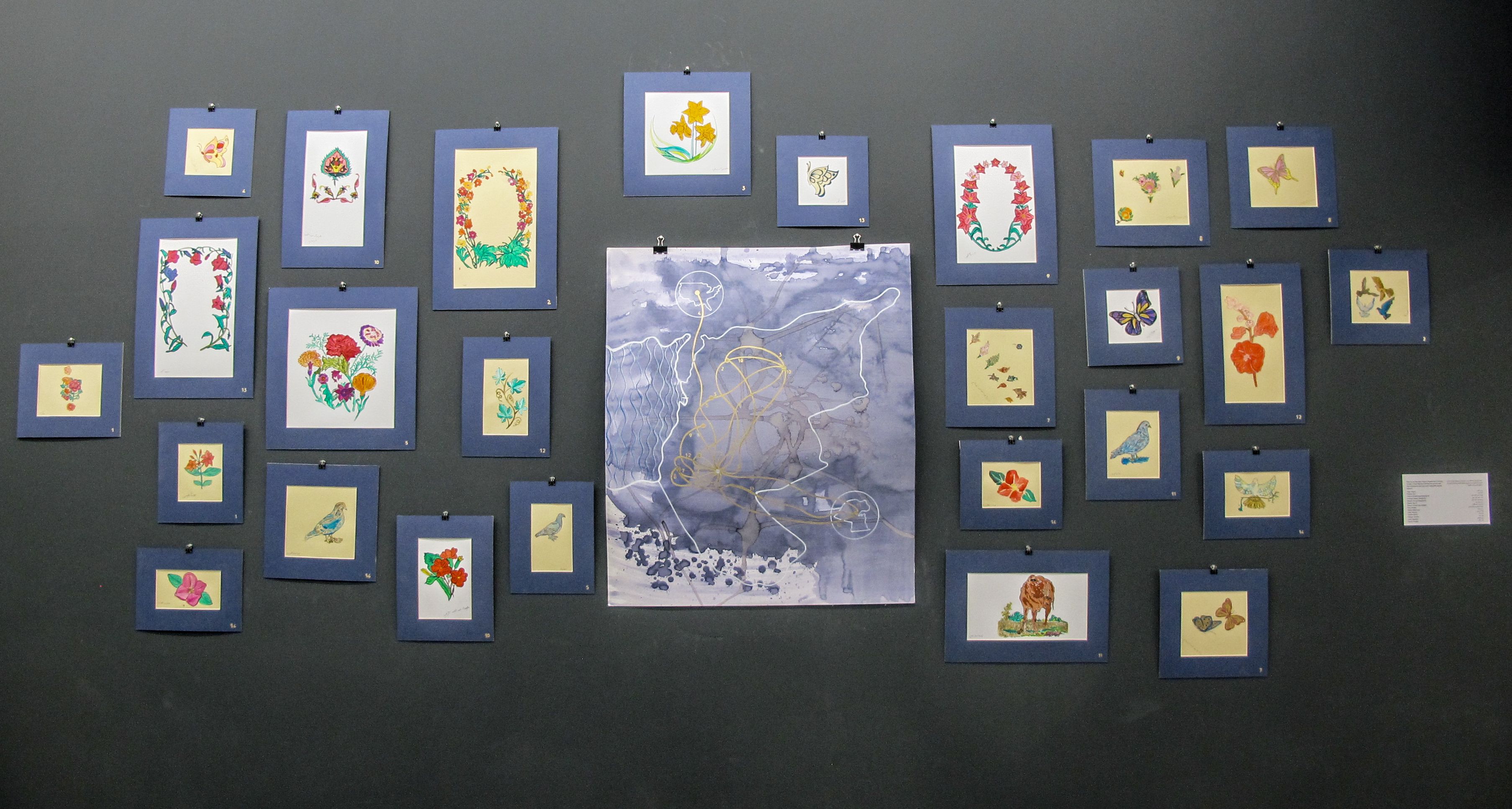 The flower at home by women from Zarqa’s Khawla Bint Al Azwar Society.
Hajar Alqdro, Aminah Azo, Fatima Mohammad AlSayed Ali, Kholoud Hasan Ahmad Ali, Radiah Ahmad Alsayed Ali, Rabah Haj Ali, Dunya Yousef Abd Alfattah, Aida AlRefai, Wisam Mahmoud, Haifa Alzoubi, Ghada Kamal, Haneen Ahmad, Areej Alaqtash, Hanan Ghalab
The flower at home by women from Zarqa’s Khawla Bint Al Azwar Society.
Hajar Alqdro, Aminah Azo, Fatima Mohammad AlSayed Ali, Kholoud Hasan Ahmad Ali, Radiah Ahmad Alsayed Ali, Rabah Haj Ali, Dunya Yousef Abd Alfattah, Aida AlRefai, Wisam Mahmoud, Haifa Alzoubi, Ghada Kamal, Haneen Ahmad, Areej Alaqtash, Hanan Ghalab
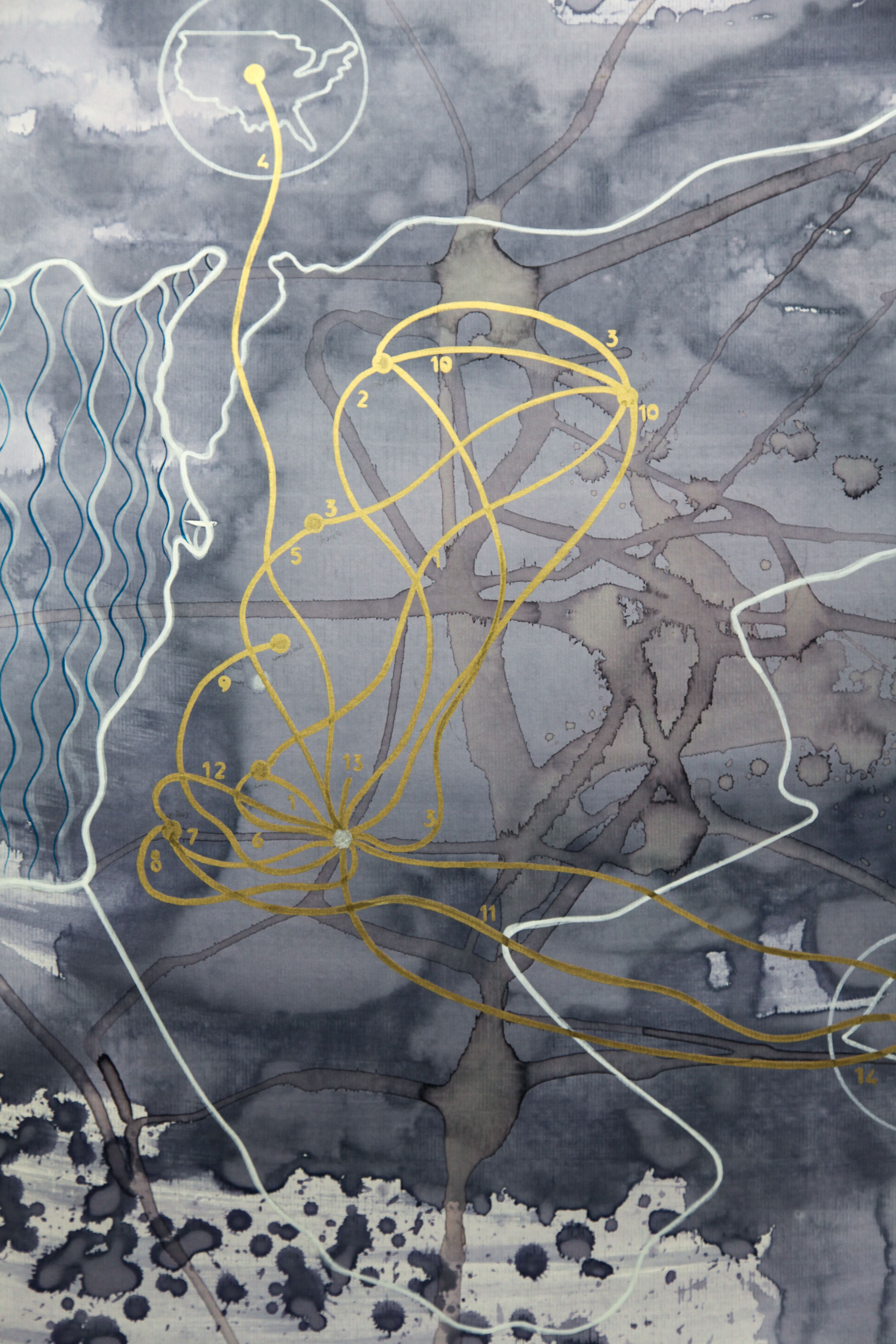
Follow the lines that link to the hometowns and their work made with natural patterns
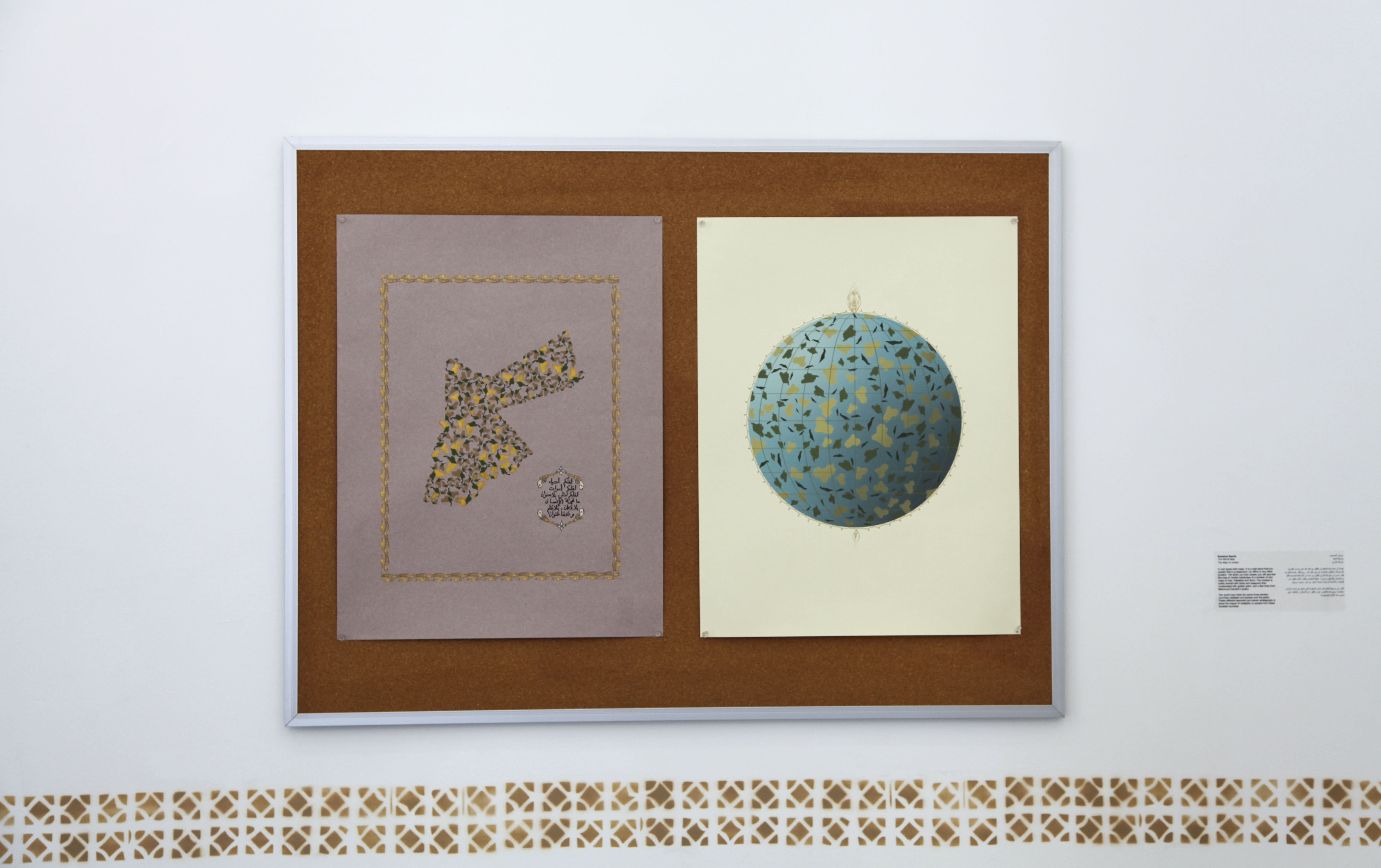 Suzanne Saoub
The World Map, The Map of Jordan
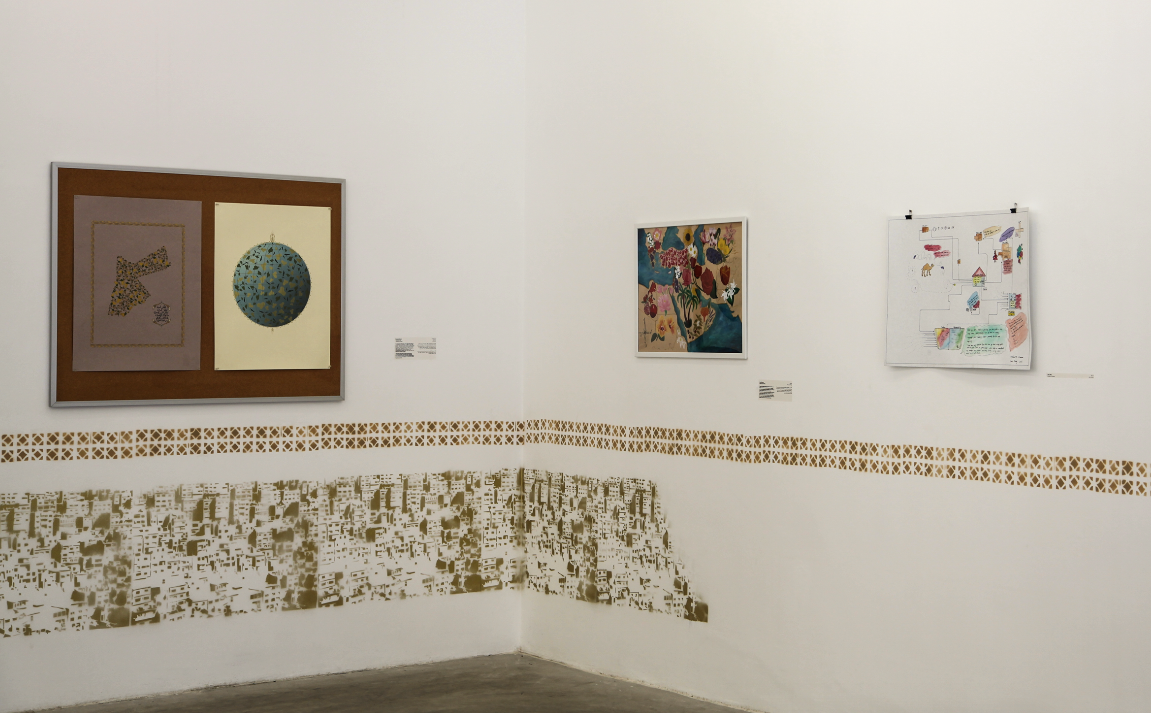
A cork board with maps. It is a wall piece that you usually find in a classroom, an office or any other location. Yet when you look closely you will see that the map of Jordan comprises of a number of mini maps of Iraq, Palestine and Syria. The content is subtly framed with tanks and weapons then ornamented with golden paint, and a few lines from Mahmoud Darwish’s poetry.
The world map holds the same three stricken countries repeated and spread over the globe. These different elements are placed strategically to show the impact of instability on people from these troubled countries.
Suzanne Saoub
The World Map, The Map of Jordan
A cork board with maps. It is a wall piece that you usually find in a classroom, an office or any other location. Yet when you look closely you will see that the map of Jordan comprises of a number of mini maps of Iraq, Palestine and Syria. The content is subtly framed with tanks and weapons then ornamented with golden paint, and a few lines from Mahmoud Darwish’s poetry.
The world map holds the same three stricken countries repeated and spread over the globe. These different elements are placed strategically to show the impact of instability on people from these troubled countries.
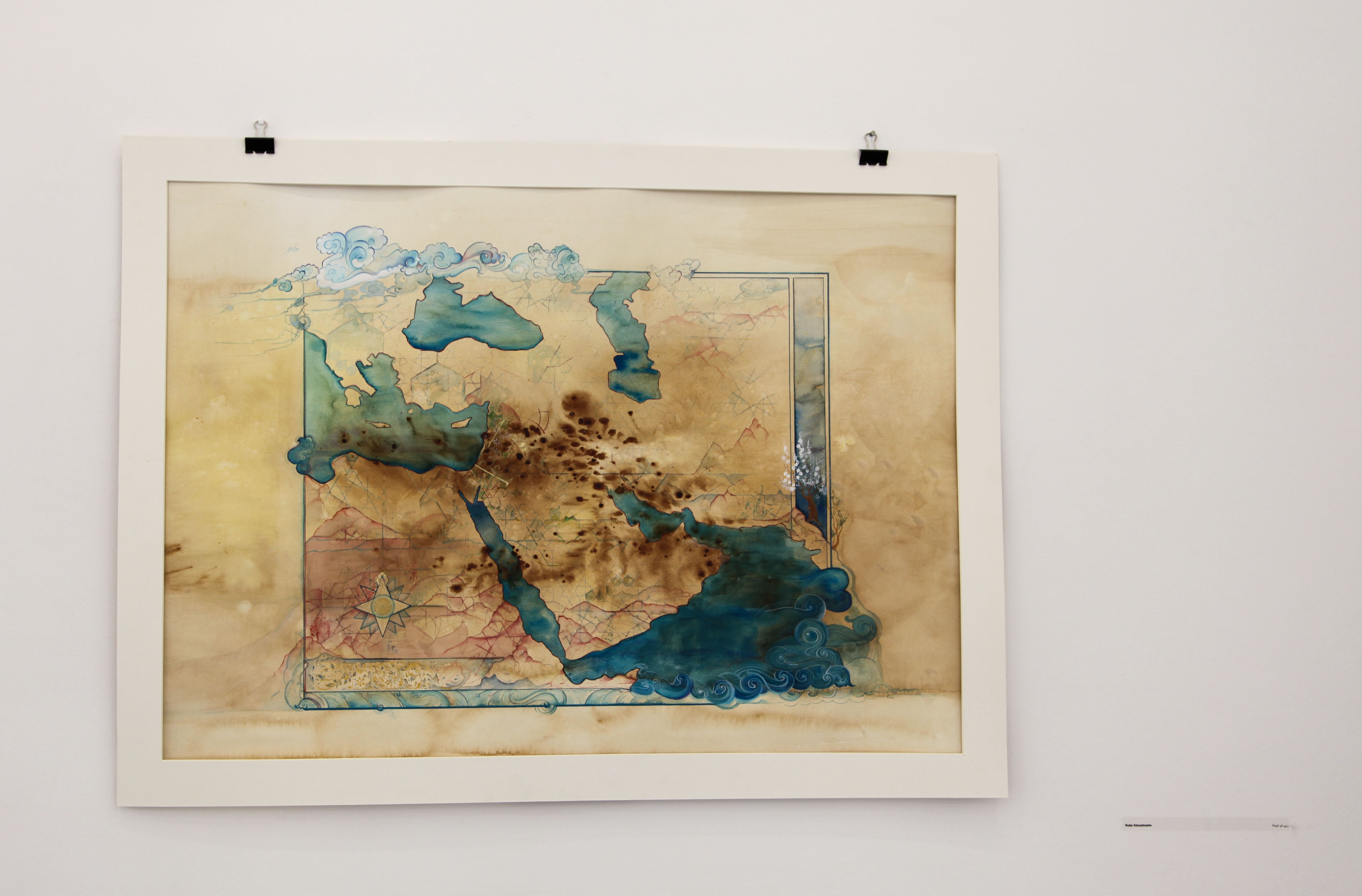 Ruba Abu Shousheh
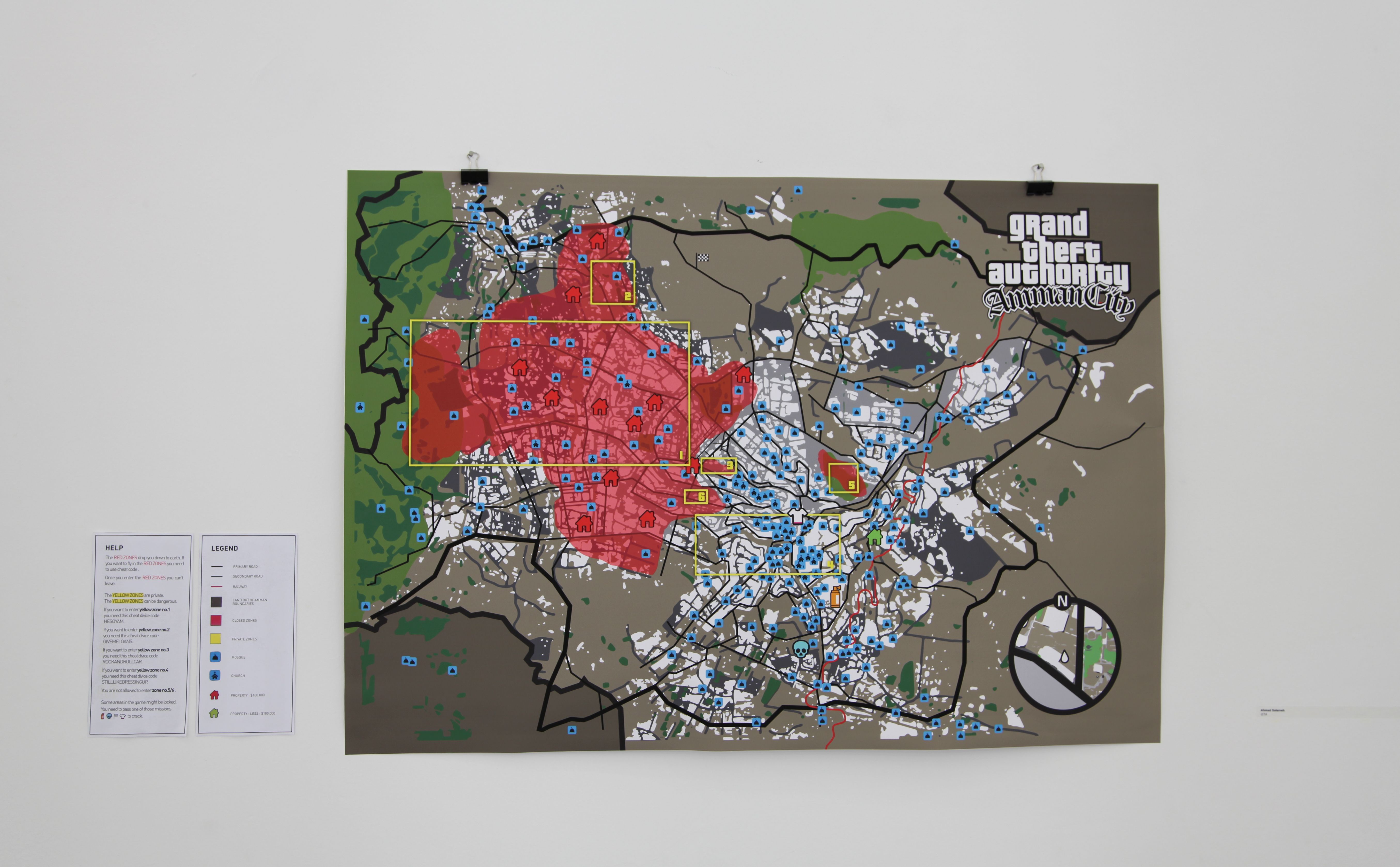 Ahmad Salameh,
GTA
Ahmad Salameh,
GTA
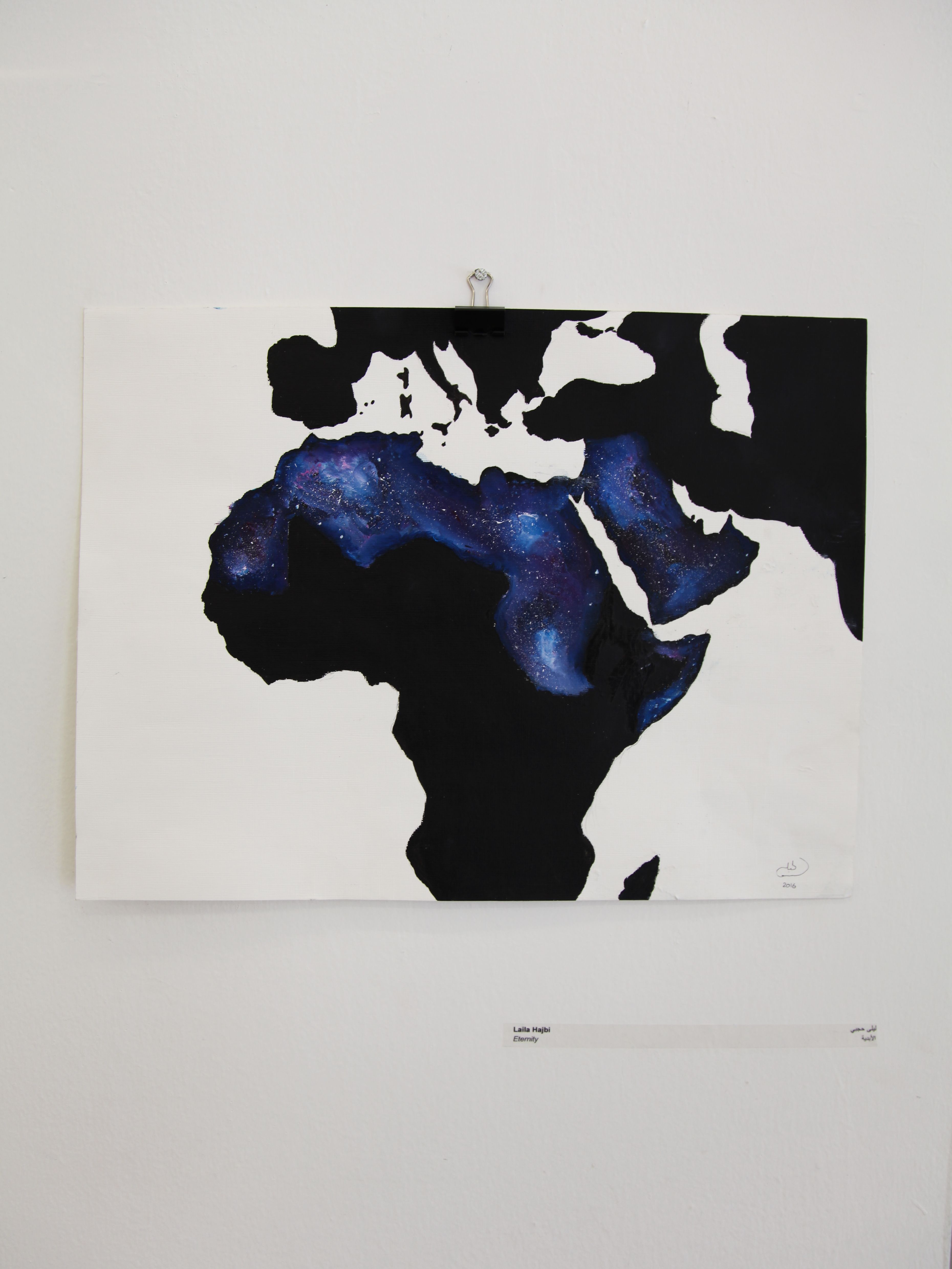
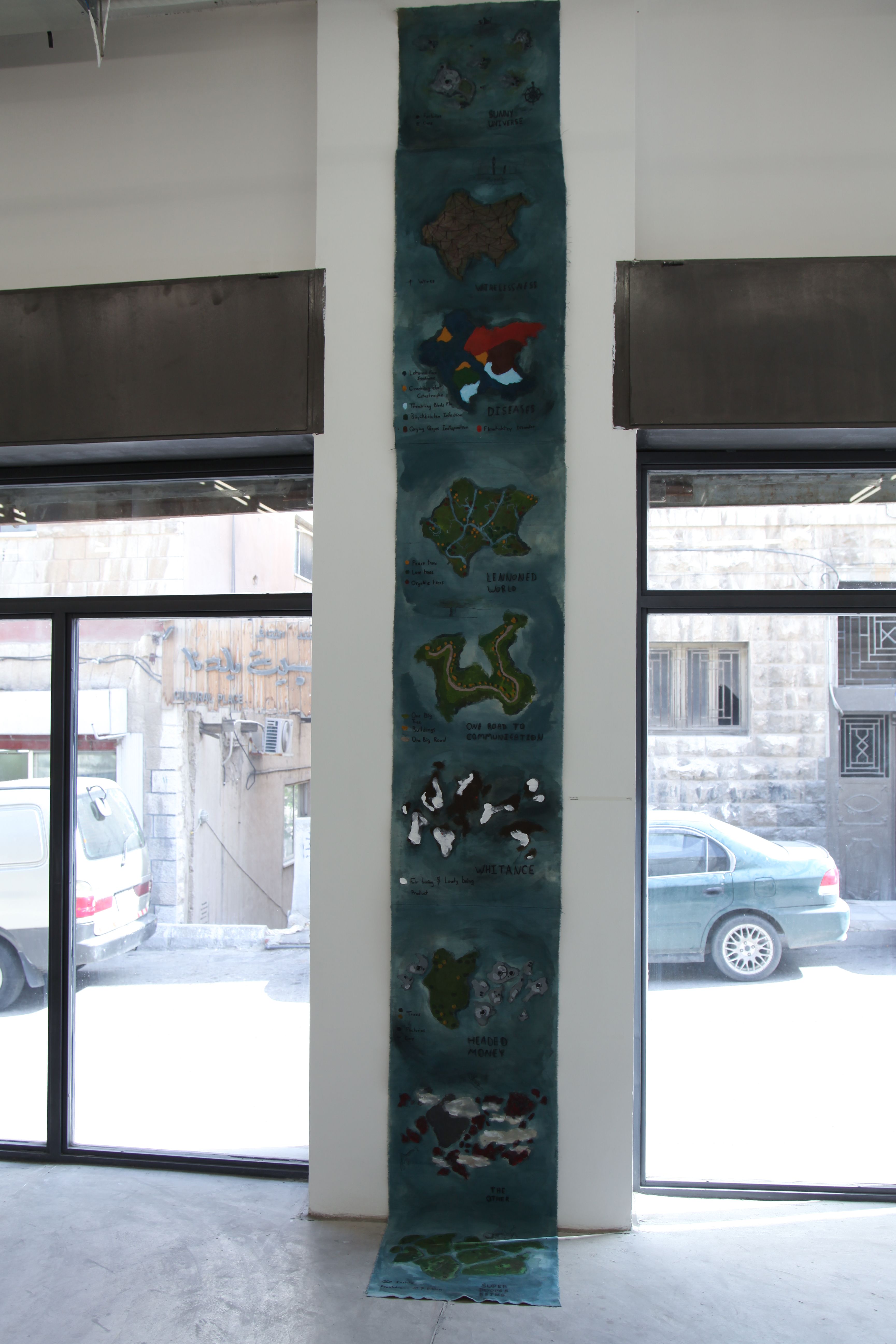 Laila Hajbi,
Eternity
Laila Hajbi,
Eternity
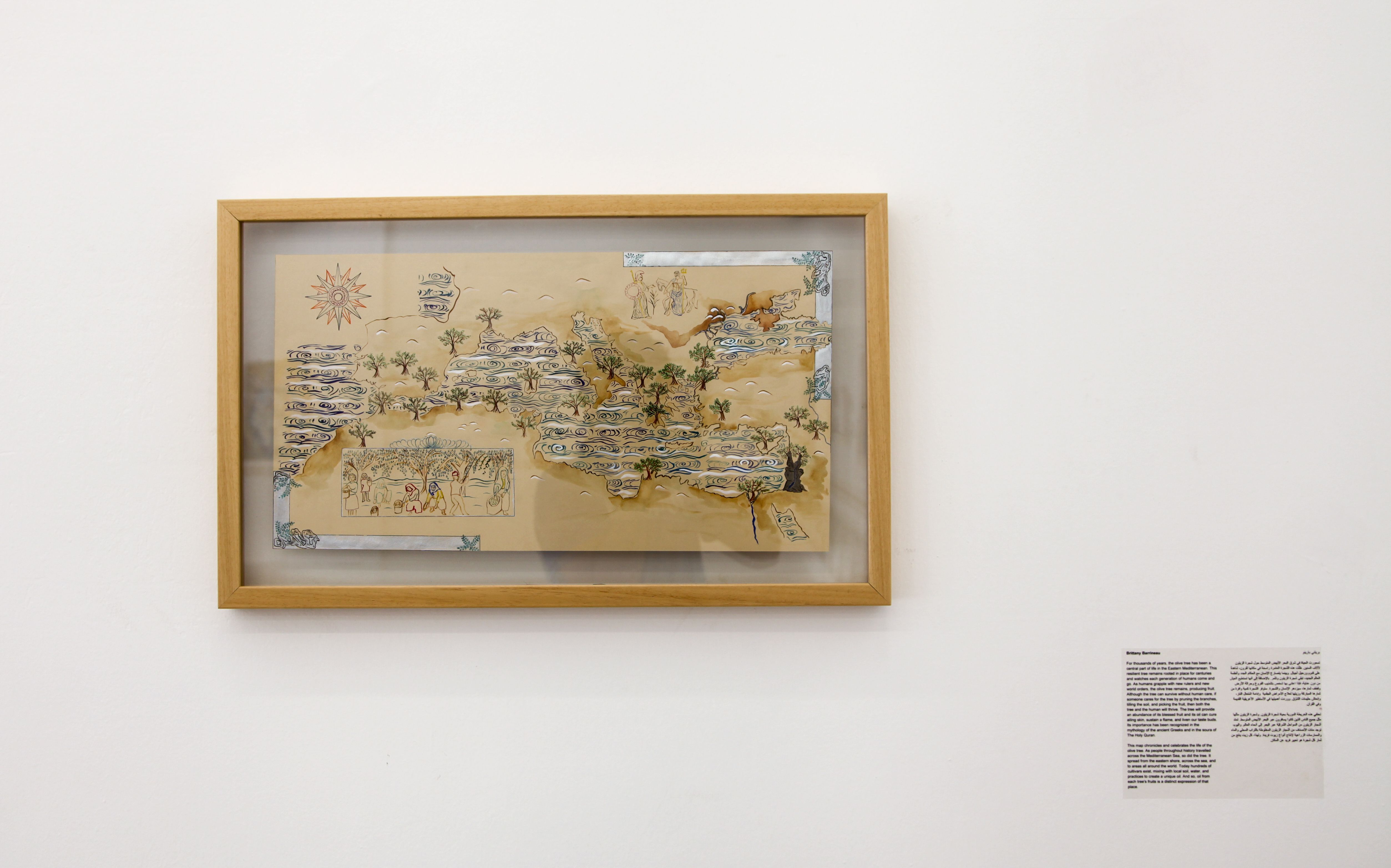 Brittany Barrineau,
For thousands of years, the olive tree has been a central part of life in the Eastern Mediterranean. This resilient tree remains rooted in place for centuries and watches each generation of humans come and go. As humans grapple with new rulers and new world orders, the olive tree remains, producing fruit. Although the tree can survive without human care, if someone cares for the tree by pruning the branches, tilling the soil, and picking the fruit, then both the tree and the human will thrive. The tree will provide an abundance of its blessed fruit and its oil can cure ailing skin, sustain a flame, and liven our taste buds. Its importance has been recognized in the mythology of the ancient Greeks and in the soura of The Holy Quran.
This map chronicles and celebrates the life of the olive tree. As people throughout history travelled across the Mediterranean Sea, so did the tree. It spread from the eastern shore, across the sea, and to areas all around the world. Today hundreds of cultivars exist, mixing with local soil, water, and practices to create a unique oil. And so, oil from each tree's fruits is a distinct expression of that place.
Brittany Barrineau,
For thousands of years, the olive tree has been a central part of life in the Eastern Mediterranean. This resilient tree remains rooted in place for centuries and watches each generation of humans come and go. As humans grapple with new rulers and new world orders, the olive tree remains, producing fruit. Although the tree can survive without human care, if someone cares for the tree by pruning the branches, tilling the soil, and picking the fruit, then both the tree and the human will thrive. The tree will provide an abundance of its blessed fruit and its oil can cure ailing skin, sustain a flame, and liven our taste buds. Its importance has been recognized in the mythology of the ancient Greeks and in the soura of The Holy Quran.
This map chronicles and celebrates the life of the olive tree. As people throughout history travelled across the Mediterranean Sea, so did the tree. It spread from the eastern shore, across the sea, and to areas all around the world. Today hundreds of cultivars exist, mixing with local soil, water, and practices to create a unique oil. And so, oil from each tree's fruits is a distinct expression of that place.
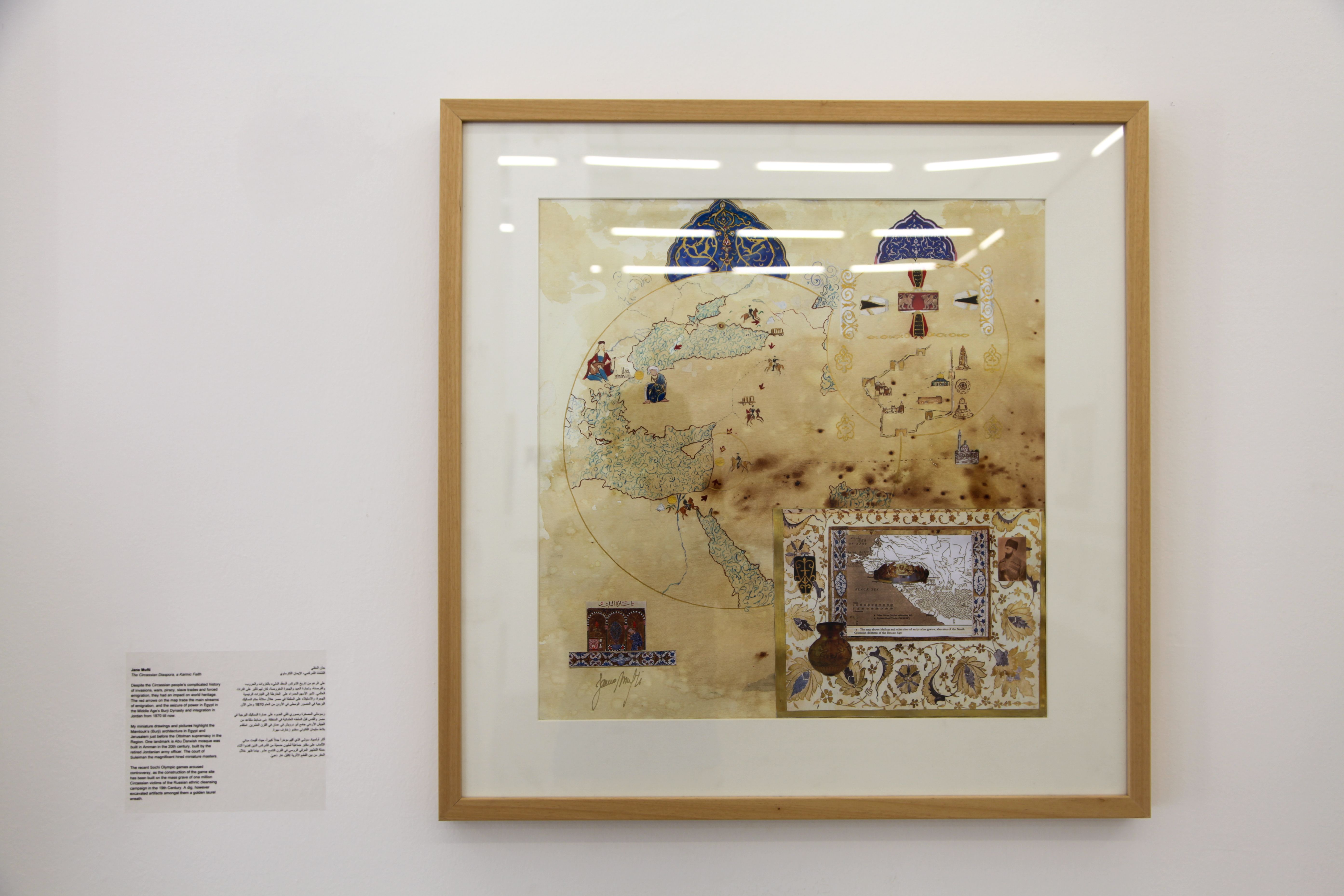 Jane Mufti,
The Circassian Diaspora, a Karmic Faith
Jane Mufti,
The Circassian Diaspora, a Karmic Faith
Despite the Circassian people’s complicated history of invasions, wars, piracy, slave trades and forced emigration, they had an impact on world heritage. The red arrows on the map trace the main streams of emigration, and the seizure of power in Egypt in the Middle Age’s Burji Dynasty and integration in Jordan from 1870 till now.
My miniature drawings and pictures highlight the Mamlouk’s (Burji) architecture in Egypt and Jerusalem just before the Ottoman supremacy in the Region. One landmark is Abu Darwish mosque was built in Amman in the 20th century, built by the retired Jordanian army officer. The court of Suleiman the magnificent hired miniature masters.
The recent Sochi Olympic games aroused controversy, as the construction of the game site has been built on the mass grave of one million Circassian victims of the Russian ethnic cleansing campaign in the 19th Century. A dig, however excavated artifacts amongst them a golden laurel wreath.
 Dana Kaoukji,
Transcendence
Dana Kaoukji,
Transcendence