Hazbahçe
Yıldız, from the series Hazbahçe, 2023, Public Intervention, Carving on fir tree, 180 x 9 x 3 cm. Commissioned within the scope of SAHA Studio program and produced with the support of SAHA, Photos: Serra Yentürk, Kayhan Kaygusuz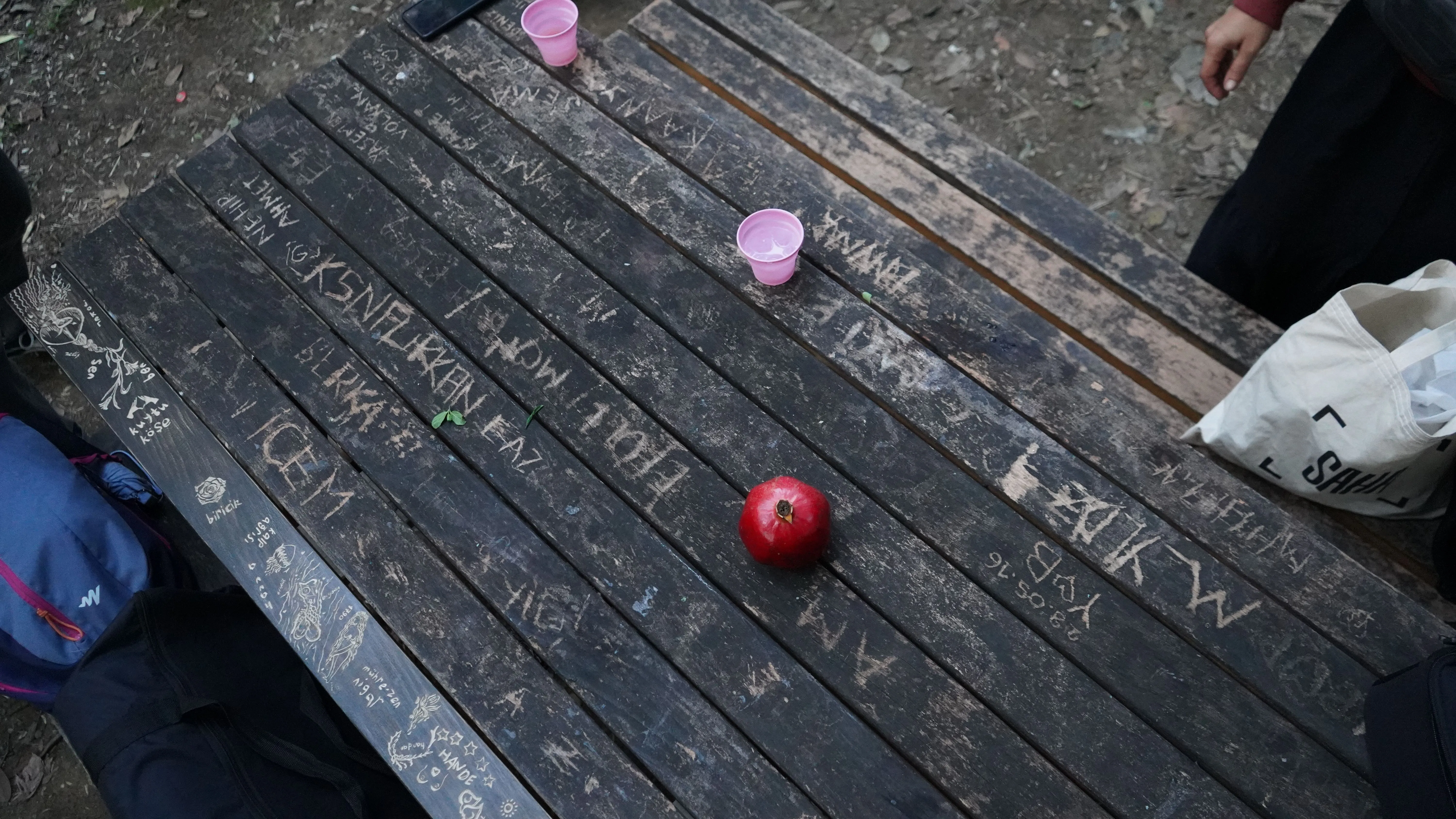
Upon the invitation of SAHA Studio, Çakar presents a series of garden depictions that interpret different public spaces devoted to landscaping, ranging from 18th-century promenade areas to today's national gardens through concepts such as fear and pleasure, coupled with a public intervention.
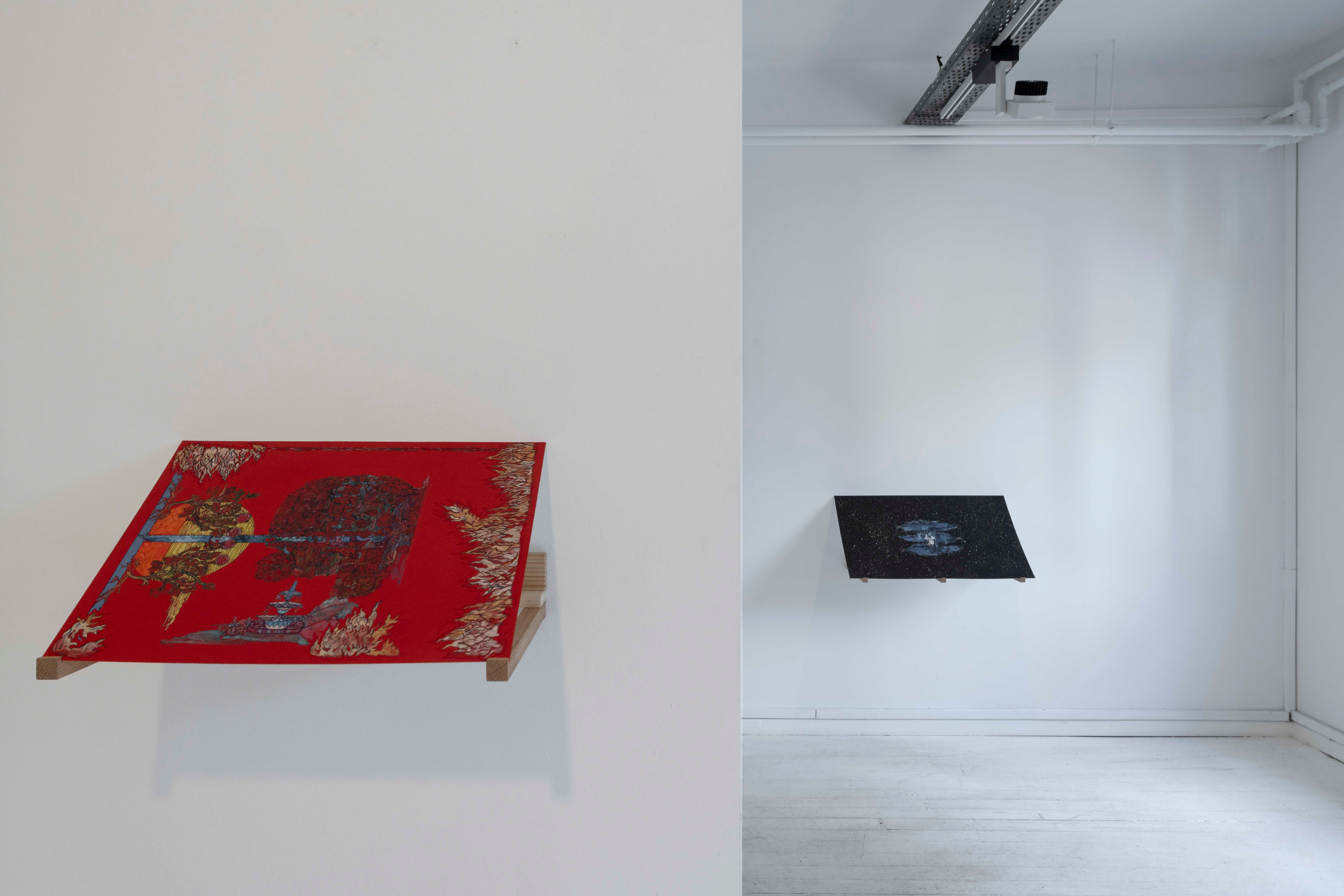 Installation view of Day and Night from Hazbahçe series, visit the links; Day and Night for more info
In her work titled Hazbahçe, produced at SAHA Studio, Cansu Çakar interprets different types of public spaces featuring landscape design, from the recreation areas of the 18th century to today’s ‘nation’s garden’s, not only on the basis of historical depictions but also through concepts such as fear and pleasure. This work draws on written records on both past and present everyday life experiences, from oral sources and contemporary observations, focusing on a series of fictional garden depictions and a public intervention. Derived from the word hasbahçe, a term describing the royal gardens of the Ottoman Empire, the title Hazbahçe [‘Pleasuregarden’] picks its fruit from an erotic communication network that triggers fear in public space.
The word used as bahçe in Turkish (bāġçe, باغچه ) means small orchard, or vineyard in Persian. It is where grapevines are grown, and wine is produced – a place where pleasure comes to be. The meeting with pleasure is the moment when the body will observe its own thoughts, and in this conceptual garden (hazbahçe), the body rejects the limitations the mind imposes on desires, and creates its own thoughts. It embraces the erotic; it does not exclude or fetishize it. After all, “...it is intermittence, as psychoanalysis has so rightly stated, which is so erotic: the intermittence of skin flashing between two articles of clothing (trousers and sweater), between two edges (the open-necked shirt, the glove and the sleeve); it is this flash itself which seduces, or rather: the staging of an appearance-as-disappearance.” [Roland Barthes, The Pleasure of the Text, translated by Richard Miller, Farrar, Straus and Giroux, 1975, p.10] The concept of intermittence appears in the artist’s work titled Nakkaştepe, produced as part of the series titled Hazbahçe. Baba Nakkaş, also the founder of one of the earliest Naqshbandi convents, pioneered the founding of the first miniature workshop at the Ottoman palace during the reign of Mehmed II. Today, the steep street leading down from the Nakkaştepe Nation’s Garden to Kuzguncuk is named Babanakkaş Street, and this steep slope that leads to the shore, delineated with high walls on both sides, is the intermittent, seductive space.
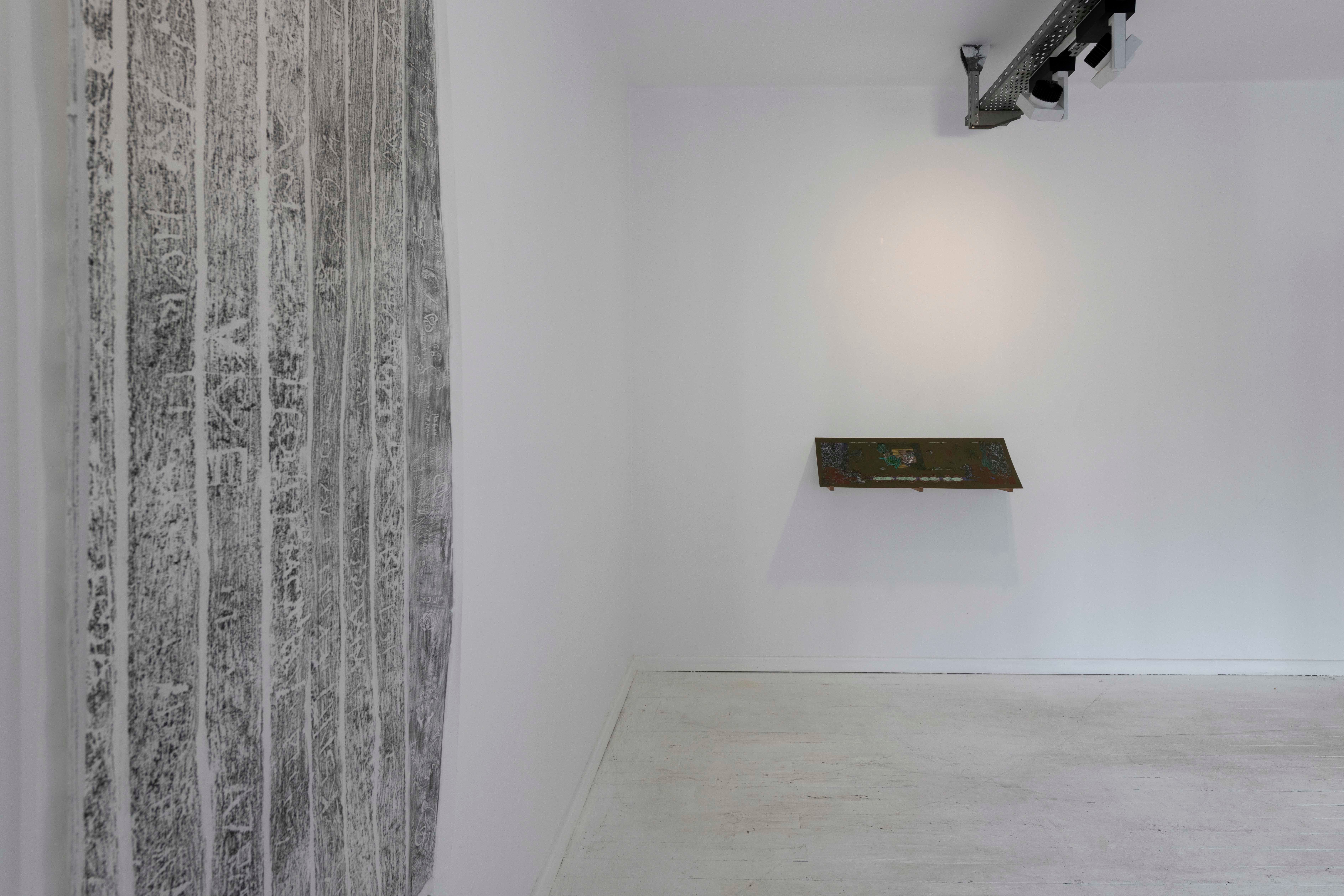 Installation view, Yıldız, Nakkaştepe
The public space intervention titled Yıldız, which Çakar has produced as part of the same series, examines a certain period by twisting the concept of intermittence that emerges in Nakkaştepe towards a direction where ends converge. The work deals with names of lovers engraved onto outdoor tables placed at picnic sites, seeking to record, using its own method, the memories concealed in these engraved names. It remembers the names, to use the old idiom, of “adventurous street and meadow girls” by adding an engraved plank to a randomly selected table in Yıldız Grove.
Hazbahçe attempts to depict the garden as a socially inclusive area that is not necessarily regular or controlled. It connects to the process of the garden opening from a walled-in area to an open area, and from the private to the public via sex and sexuality. Openness, permeability, limitlessness, vitality, and erotic ties, conceived in relation to the garden, find expression in the work titled Night and Day.