Golden Fleece
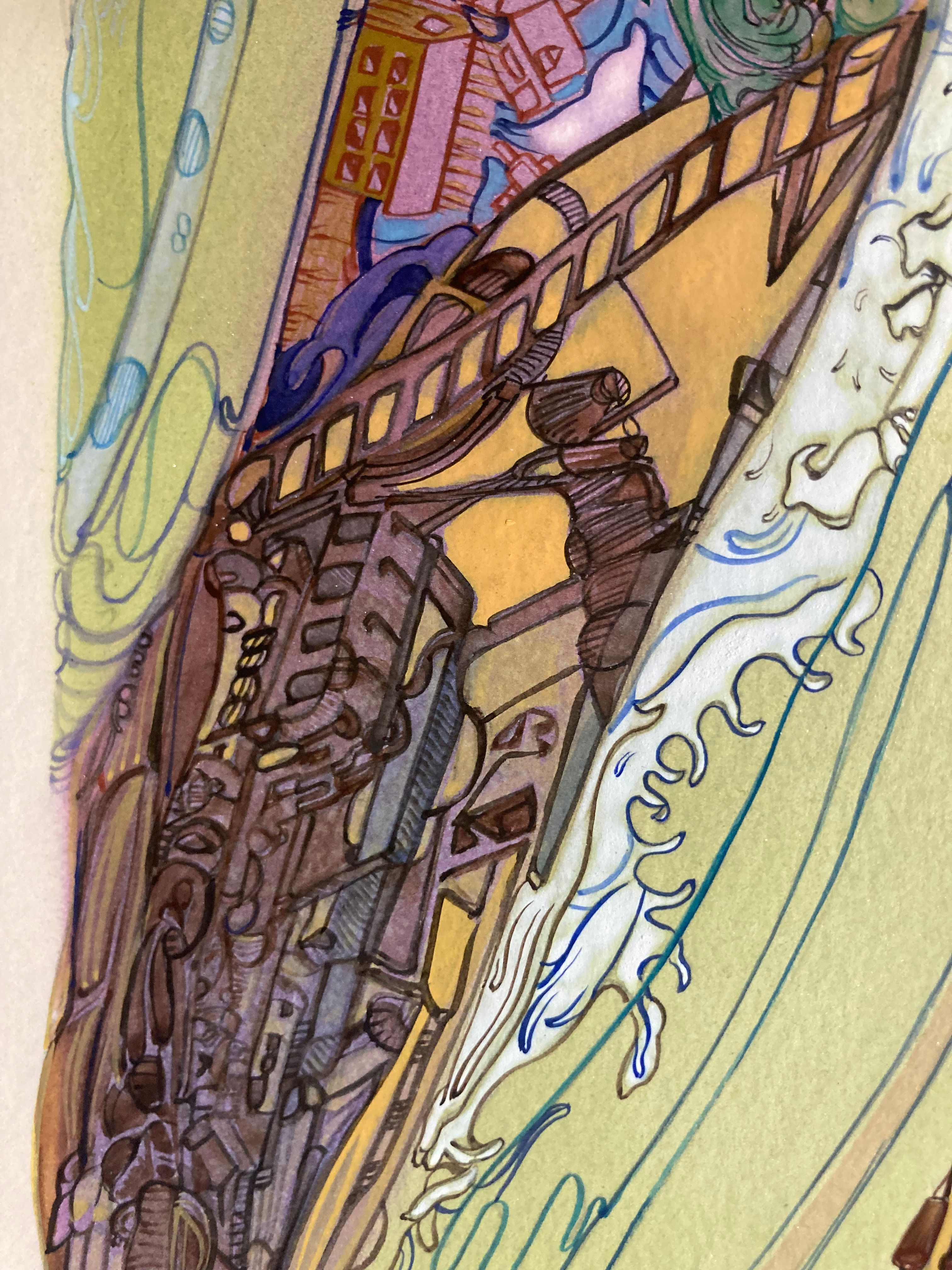
t. watercolour paint on paper s. 70 x 100 cm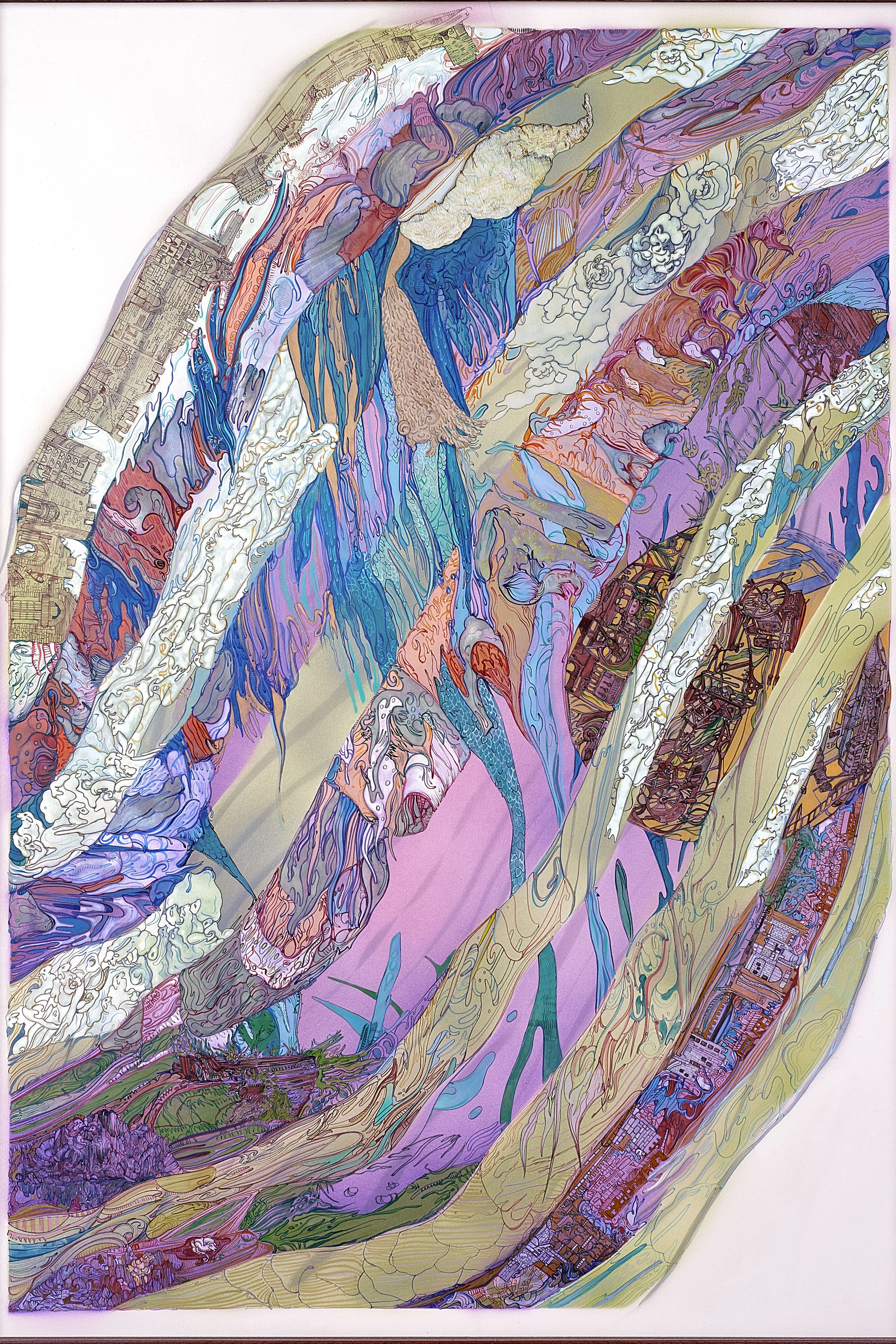
On 14 November 1991, the Lebanese-flagged livestock vessel Rebunion 18, en route from the Black Sea to the Sea of Marmara, collided near Anadolu Hisarı with the Philippine-flagged cargo ship Madonna Lily, which was travelling in the opposite direction. The dense fog was blamed for the accident. While the Madonna Lily survived with damage, Rebunion 18 was not so fortunate: it sank into the frigid waters of the Bosphorus, carrying with it 21,000 sheep bound for Syria. In the aftermath, the carcasses of the drowned animals washed ashore on nearby islands and along the straits, exposing an ecological and ethical catastrophe.
This disaster crystallised into a powerful critical image of anthropocentrism and the commodification of all life for human ends. The disappearance of 21,000 sheep into the sea comes to stand for the profound imbalance within modern systems of production and consumption, and for the precarious entanglement of humans, animals, and nature. The figure of the animal as “the Other” calls upon us to reconsider the right to life from an ethical standpoint.
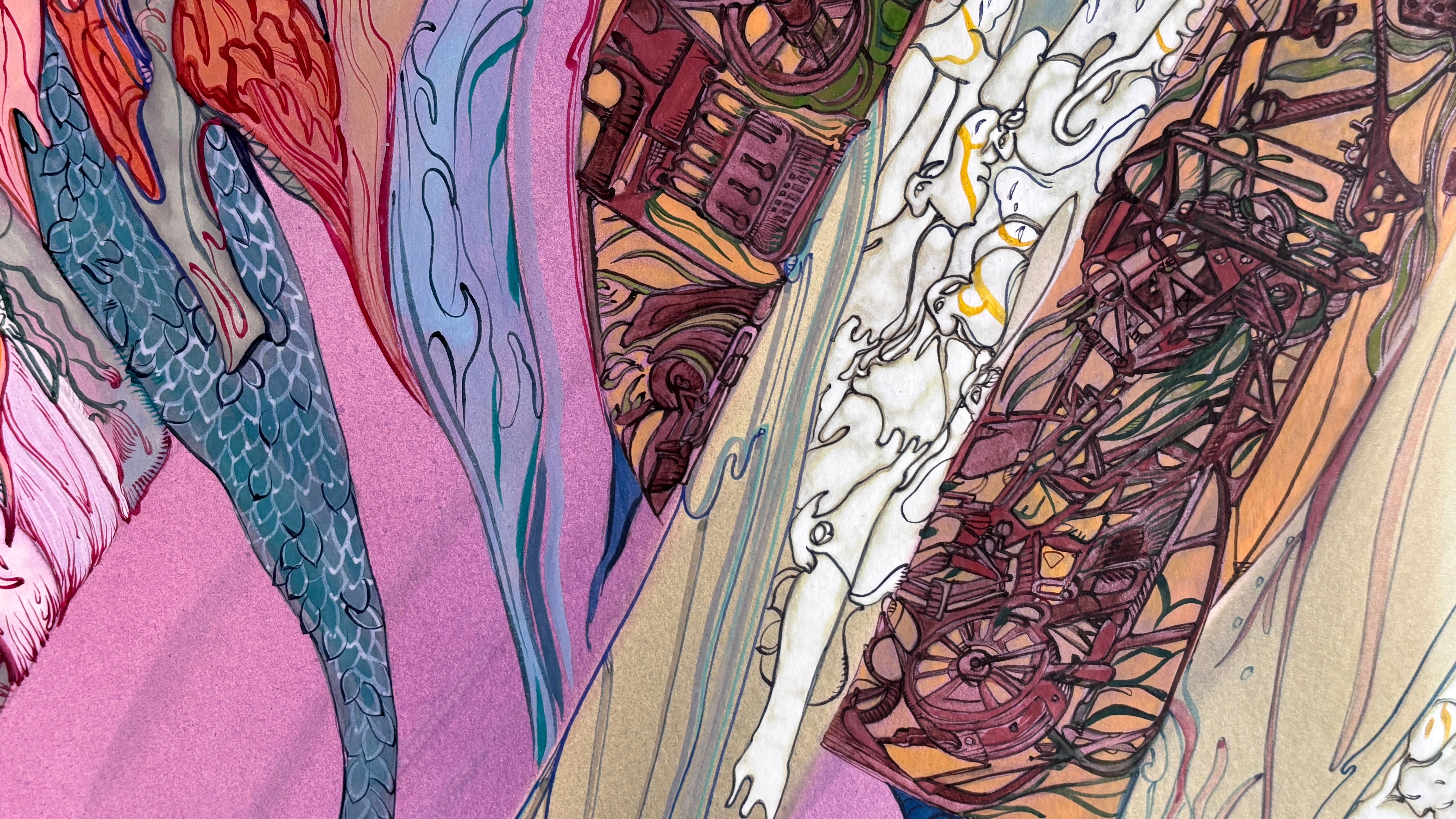
In extended readings, one might invoke Donna Haraway’s notion of sympoiesis or Bruno Latour’s actor-network theory, through which the sheep can be reinterpreted as actants. Within this frame, the event is not merely a maritime accident, but also a catastrophic and critical image— Rebunion 18’s sinking becomes a potent metaphor for ecological collapse.
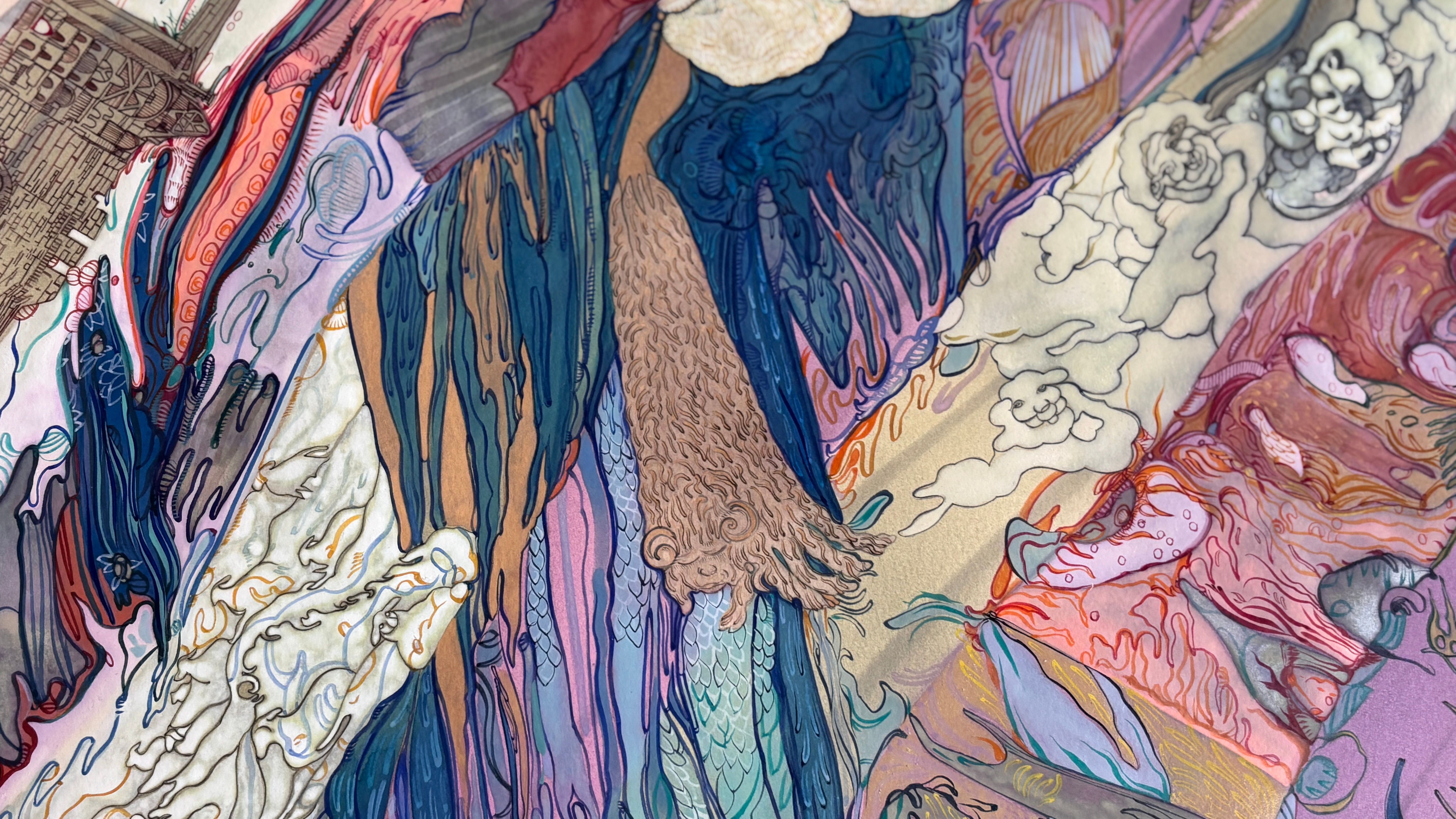
The work further incorporates a mythological parallel: the Argonauts and the Golden Fleece. The sheep here assume the material counterpart of the Fleece, but not for heroic conquest—instead, for commerce. What once signified a sacred voyage towards transcendence now mutates into a modern anti-mythology of mass death in the service of trade.
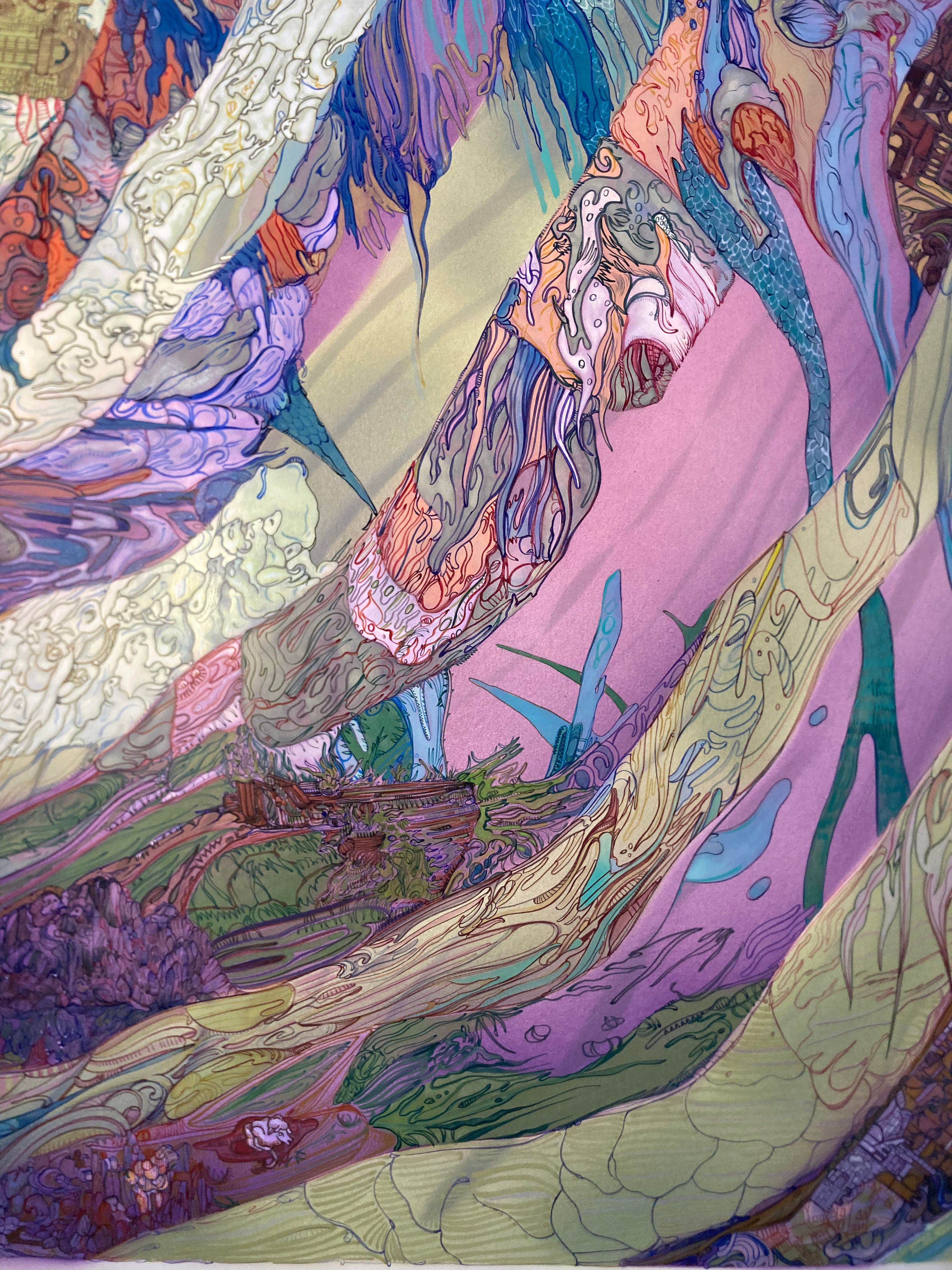
In the painting, the Bosphorus is rendered not in the familiar blues of the present day but in leaden and purple tones, recalling ancient accounts. This chromatic choice draws upon the striking absence of a distinct word for “blue” in Ancient Greek. In Homeric epics, the sea is repeatedly described as the “wine-dark” or “purple sea” (oinops pontos). Such linguistic nuance reveals cultural and perceptual codes that diverge sharply from the modern eye’s expectation of blueness. Thus, the deployment of purple is not merely an aesthetic choice but also a reminder of the history of perception. The Bosphorus, tinted in these hues, gestures simultaneously to an ancient epistemology of colour and to the visualisation of modern catastrophe. Conflated with Tyrian Purple, long associated with imperial power and exclusivity, this chromatic field transforms the sea into a metaphor oscillating between splendour, ruination, and decay. A similar approach appeared in my earlier work The Outer Darkness, where purple likewise mediated the tension between magnificence and shadow. https://cakarcansu.com/#/work/The Outer Darkness
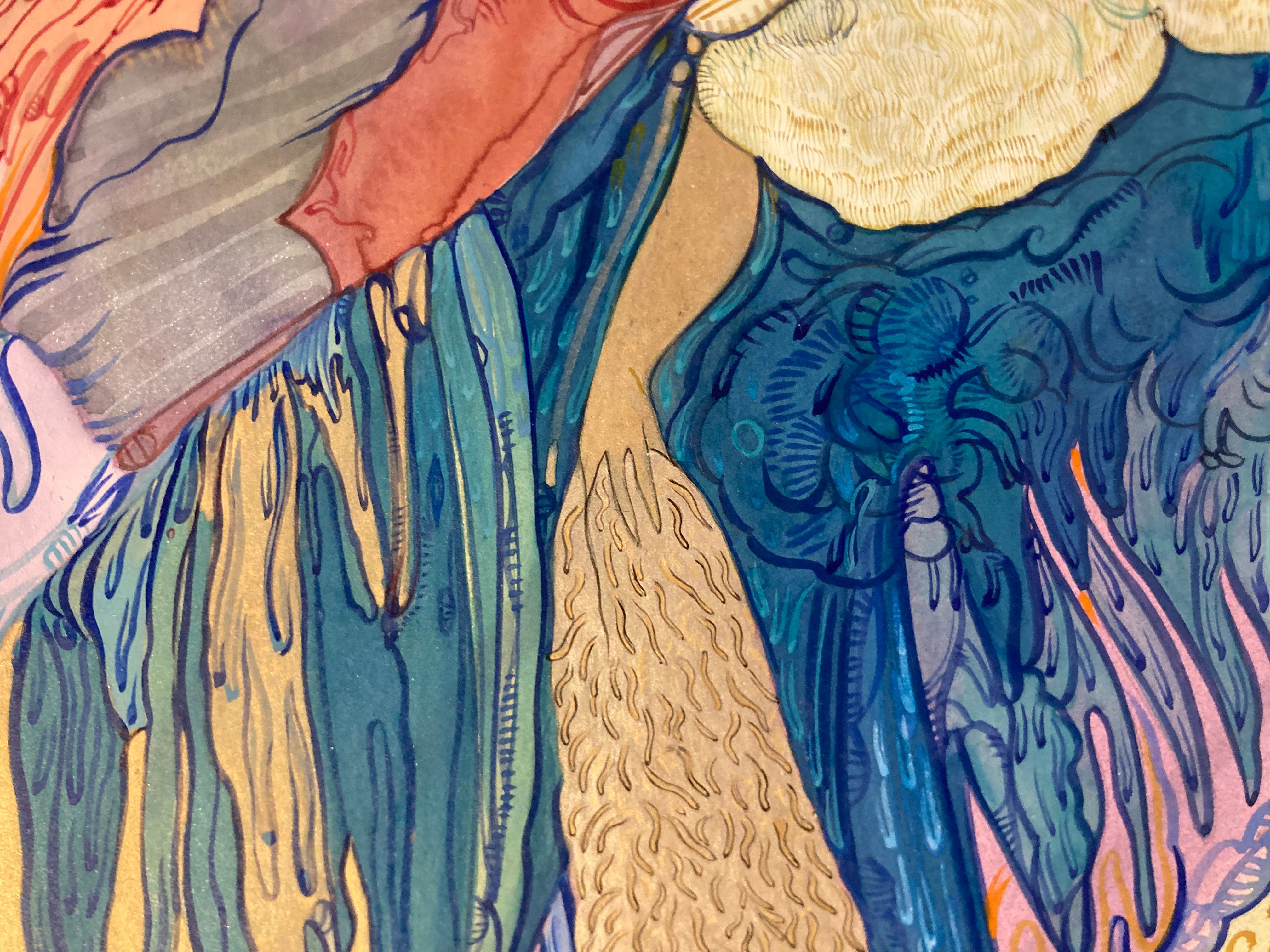
Ultimately, the sheep, reduced to the category of “bulk cargo” within the global supply chain, stand in stark contrast to Haraway’s concept of companion species. Rather than embodying the commons of shared life, they are confined within a biopolitical order of commodification. The Golden Fleece, as a painting, seeks to capture this catastrophe through a sensorially heightened, surreal aesthetic that entwines ethical, mythological, and ecological registers. The power promised to Jason by the Golden Fleece and the economic force conferred by the live animal trade in contemporary capitalism are structurally akin: both are grounded in an economy of violence. In each case, life itself is instrumentalised, summoning disaster.