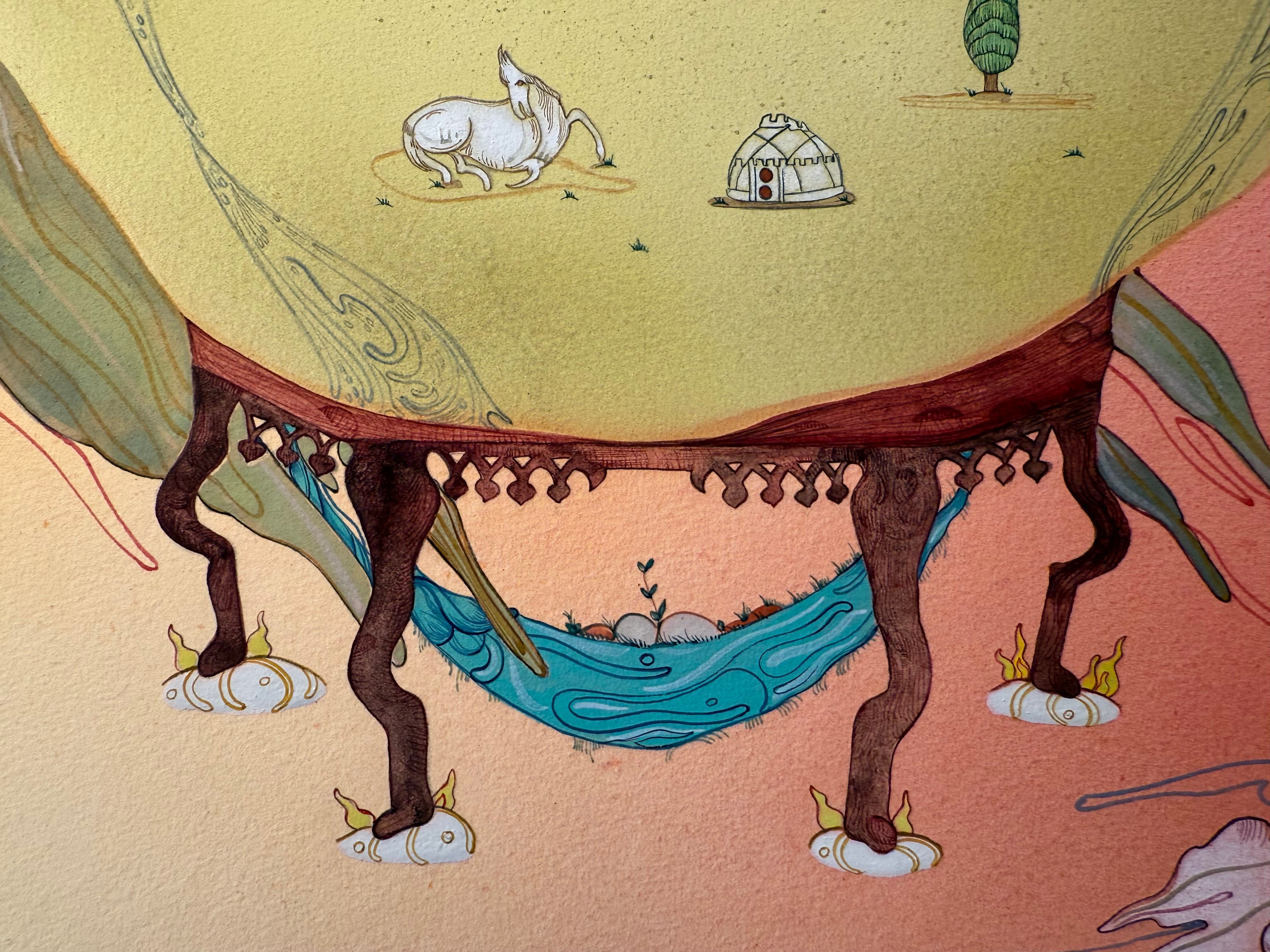
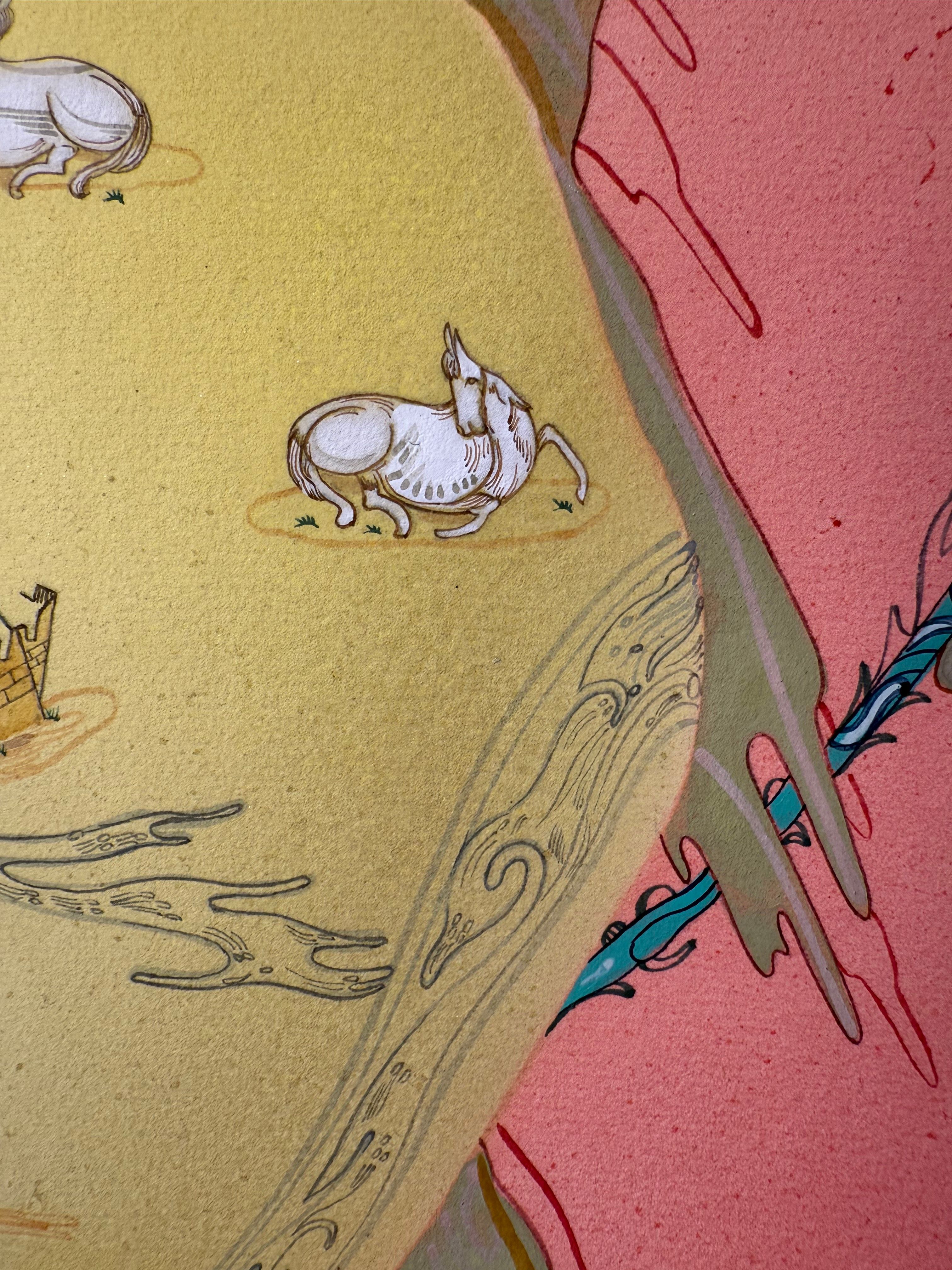
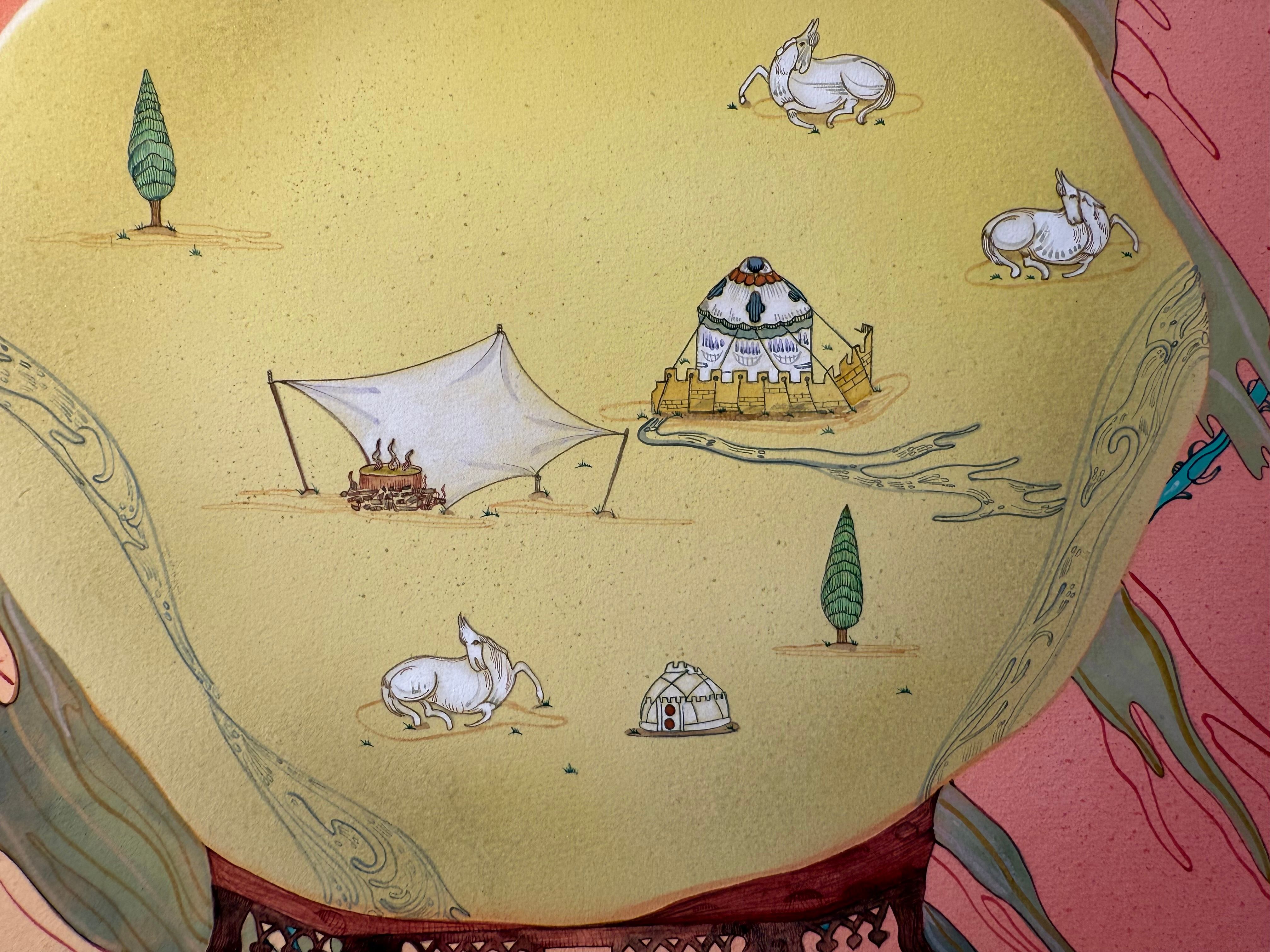
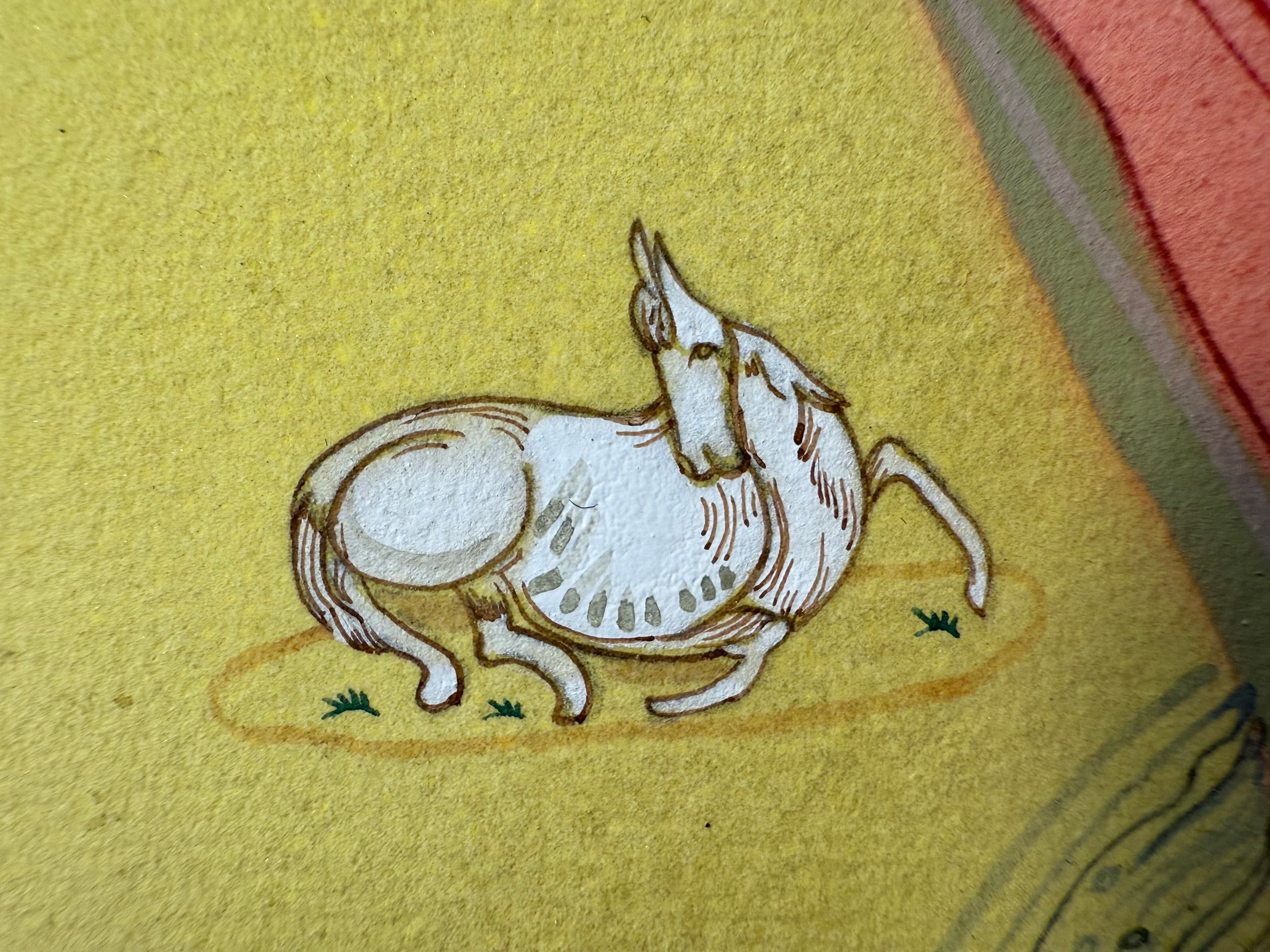
In the Halo of Two Worlds
İki Cihan Haresinde, Commissioned by Bursa Metropolitan Municipality for the Bursa Art Workshop, between 4–12 February 2025, t.watercolour and ink on paper s.37 x 52 cm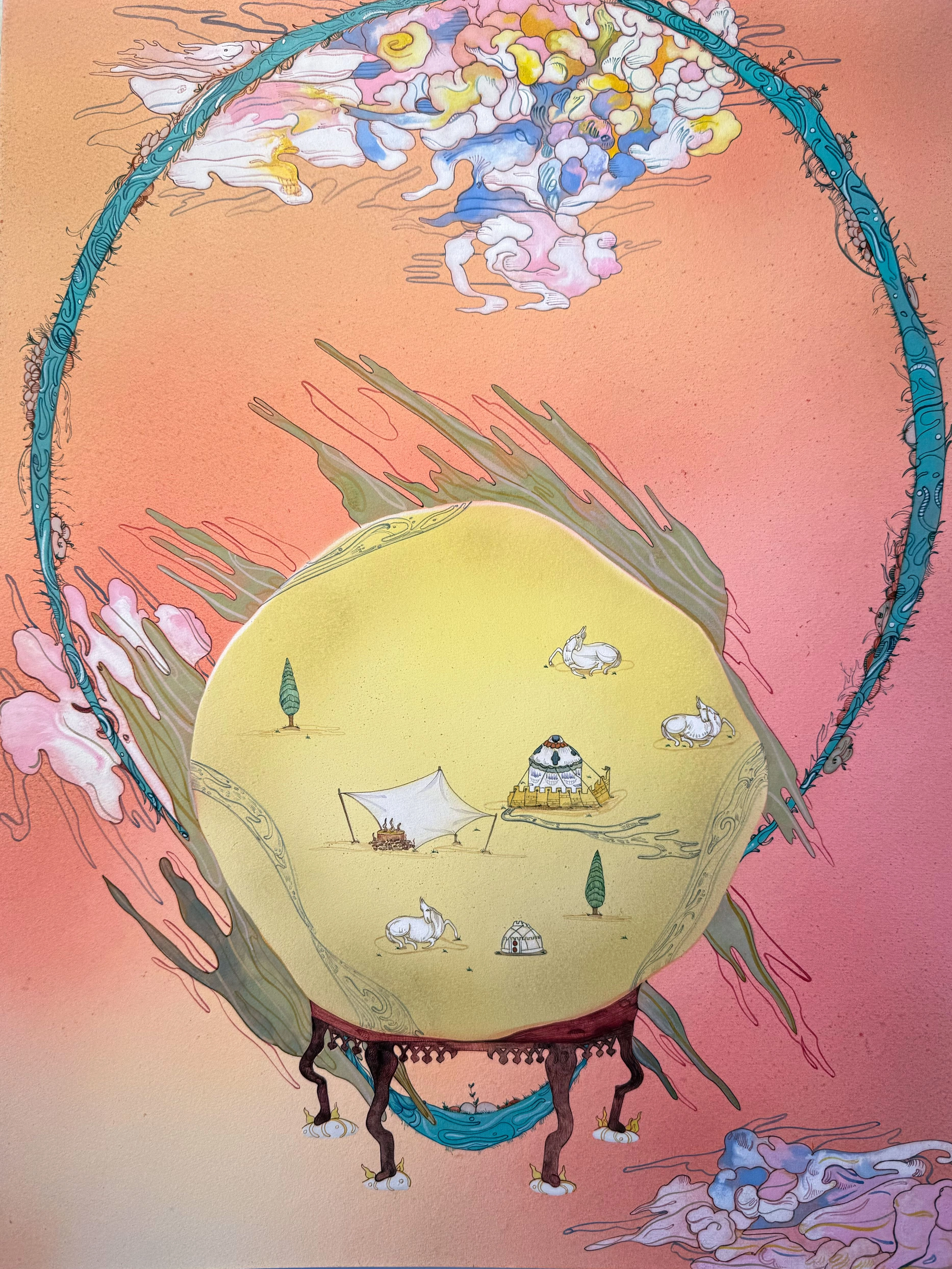
The painting engages with references to the founding of the Ottoman state and its founder, Osman Bey. Its title refers to Cemal Kafadar’s Between Two Worlds, which examines the formative period of the Ottoman polity; however, the shift from “aresinde” to “haresinde” is resolved in English as In the Halo of Two Worlds, foregrounding the brazier depicted in the painting and the luminous halo it emits. The halo of the fire evokes memory, the past, and history, while the brazier points not only to the cooking of meat but also to practices of heating, gathering, and the continuity of everyday life in earlier periods. Without stating this directly, the image allows for associations with accounts of Osman Bey’s final years—his bodily fragility, often linked to gout, and the fact that his rule remained unfinished, passing on to his son. The brazier thus becomes a site through which a moment of historical transition is considered.