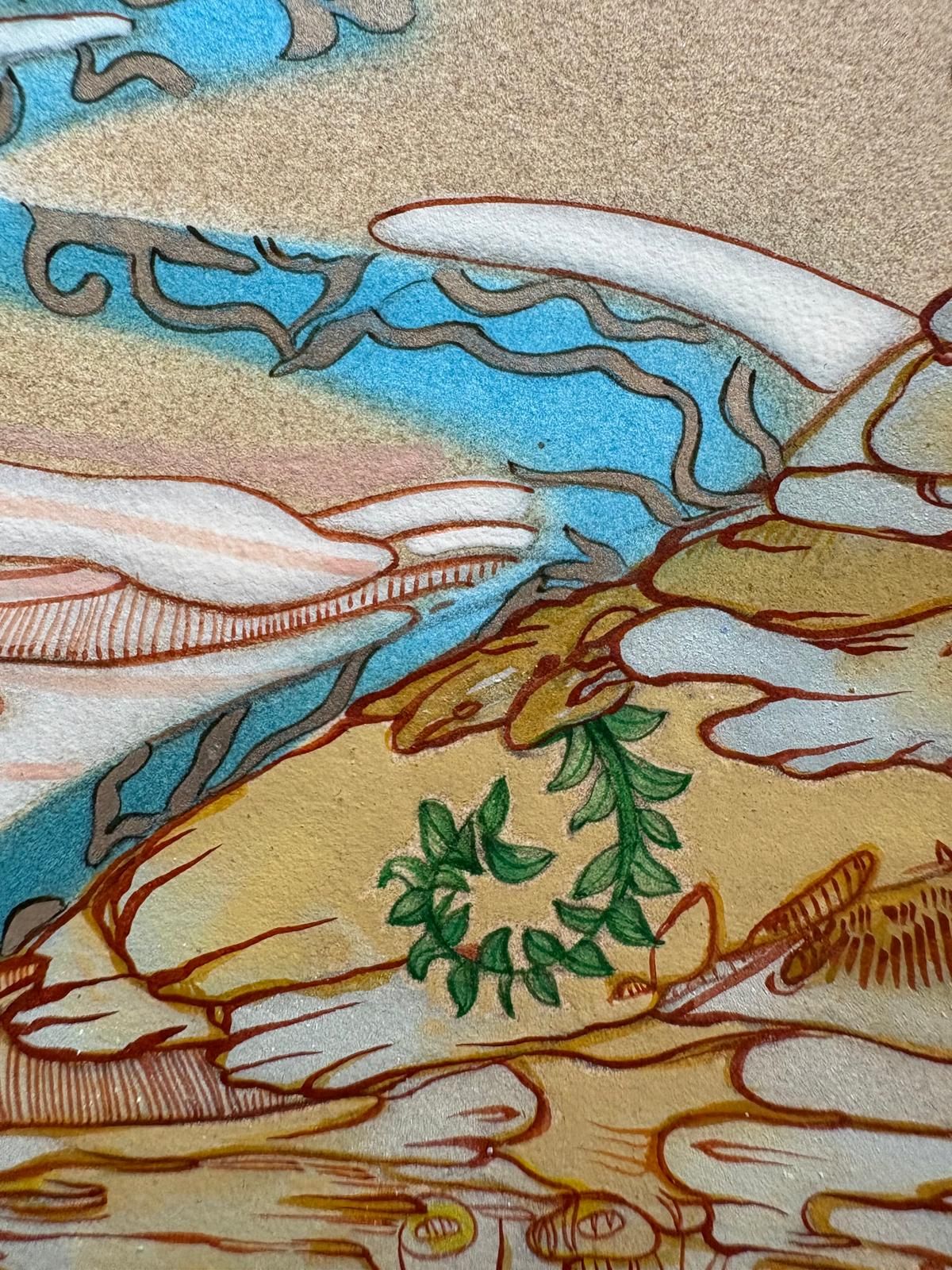
Tigris
t.watercolour, ink and gold on paper s.37 x 52 cm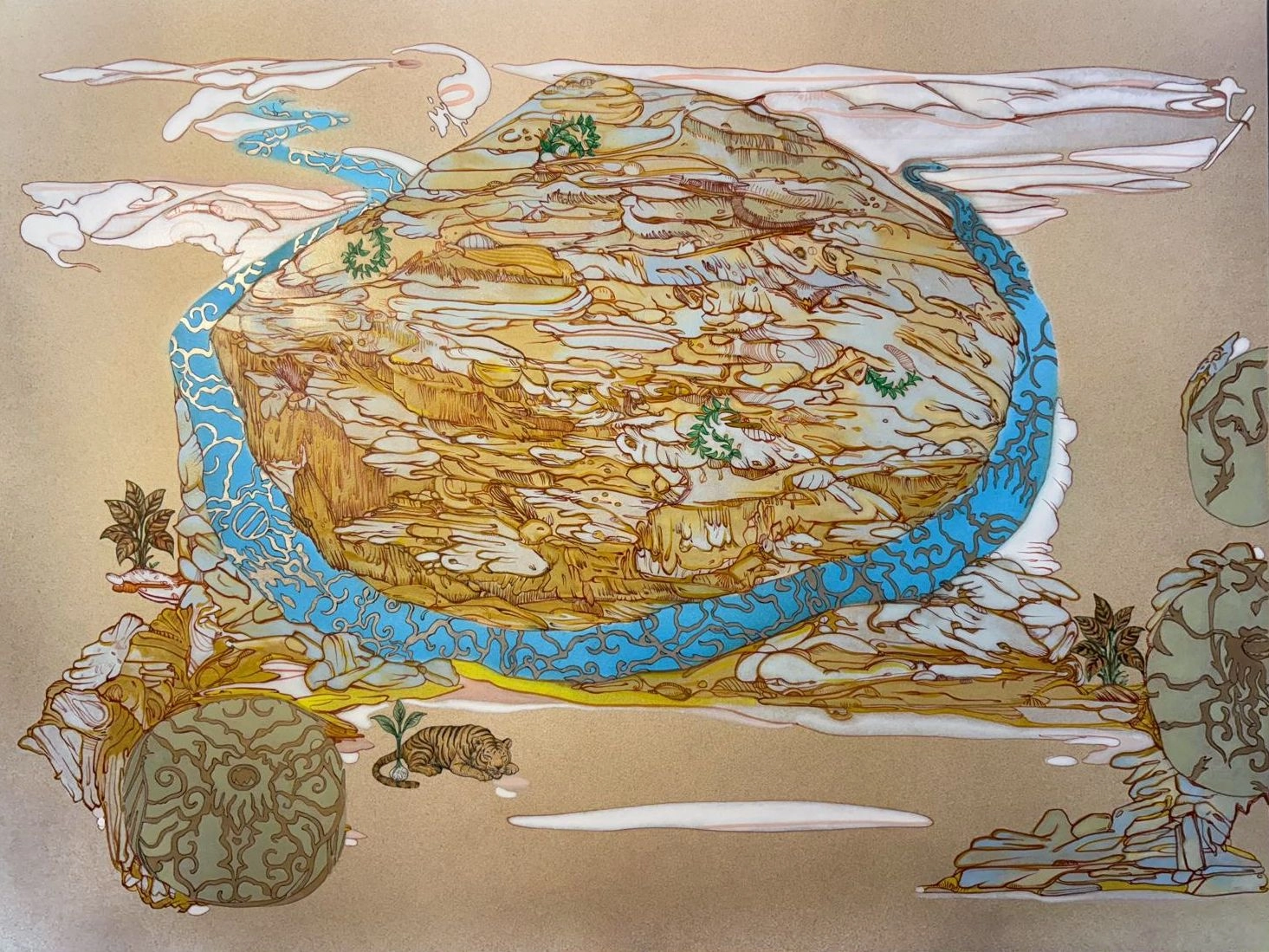

In the silent folds of ancient texts, the myth of Alphesiboea appears only in Pseudo- Plutarch’s De Fluviis (III.10). Disguised as a tiger, Dionysus forces Alphesiboea to cross the Tigris; the woman, merging with the current, dissolves into the river’s flow. It is said that the river’s name, Tigris, derives from this very scene — yet the tale gestures less toward historical fact than toward a mythopoetic intuition. The name Tigris in fact originates from the Akkadian Idiglat or the Elamite Idiqlat, meaning “swift water.” Later appearing as Tigra in Old Persian and as Tigris in Greek sources, this etymology signals the uninterrupted continuity of movement — a perpetual stream. Against this backdrop, the myth of Alphesiboea reads as a rupture: an interruption of natural flow by the violence of divine will.
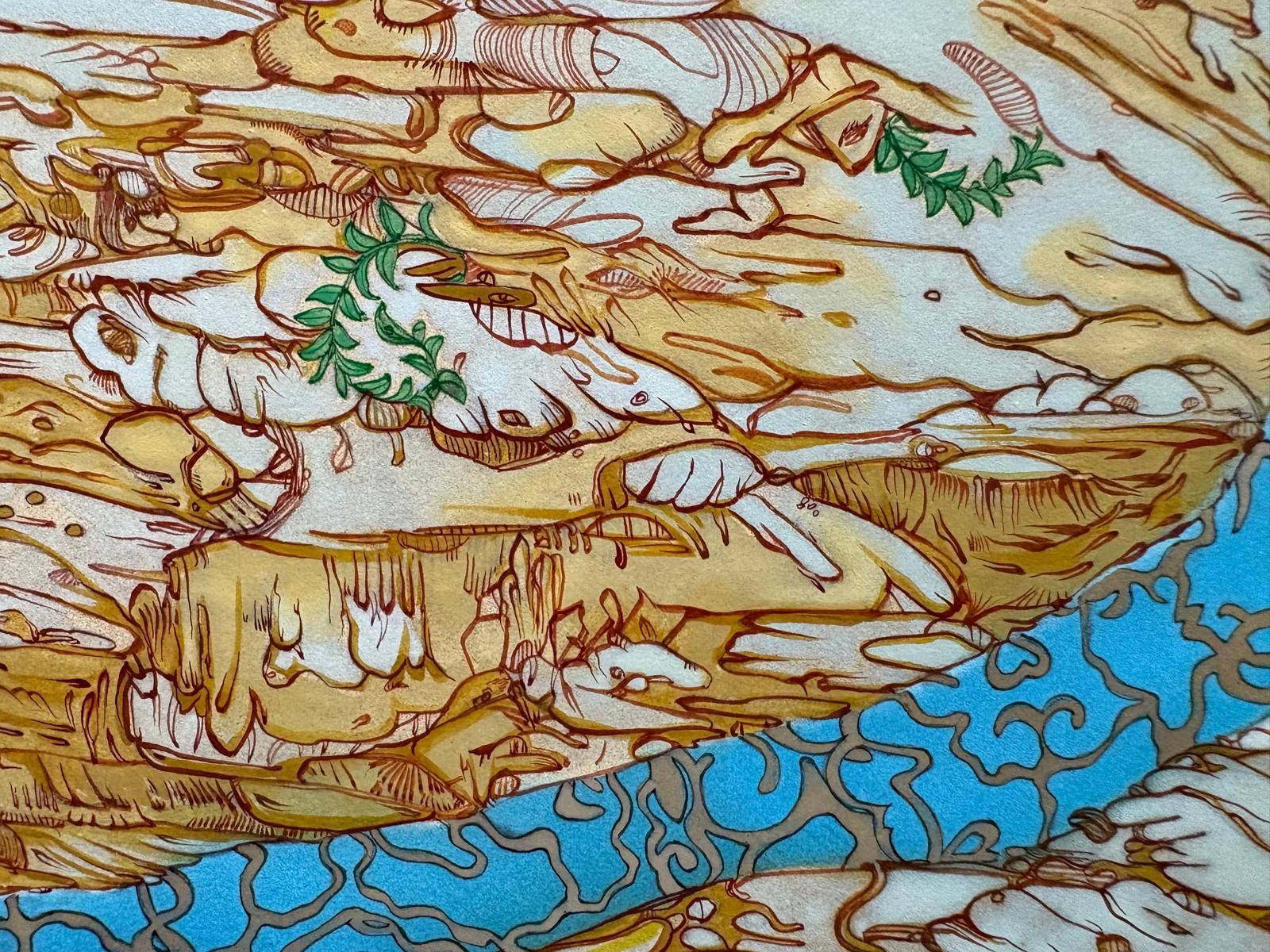
The narrative thus articulates not only the tyranny of a god but also a geography of coercion. Just as Alphesiboea’s body is subjected to Dionysian will, so too has the Tigris, centuries later, been subdued by the modern state’s appetite for control. Between dams, borders, and wars, the river’s course has been redrawn; its organic freedom compressed within the cold geometry of political maps. In the latter half of the twentieth century, Turkey’s Southeastern Anatolia Project (GAP) constructed vast dams across the Tigris and Euphrates, disrupting their natural flow and triggering acute water crises for the downstream nations of Iraq and Syria. The river thus became more than a natural resource — it emerged as a central actor within the dynamics of power, hegemony, and resource politics.
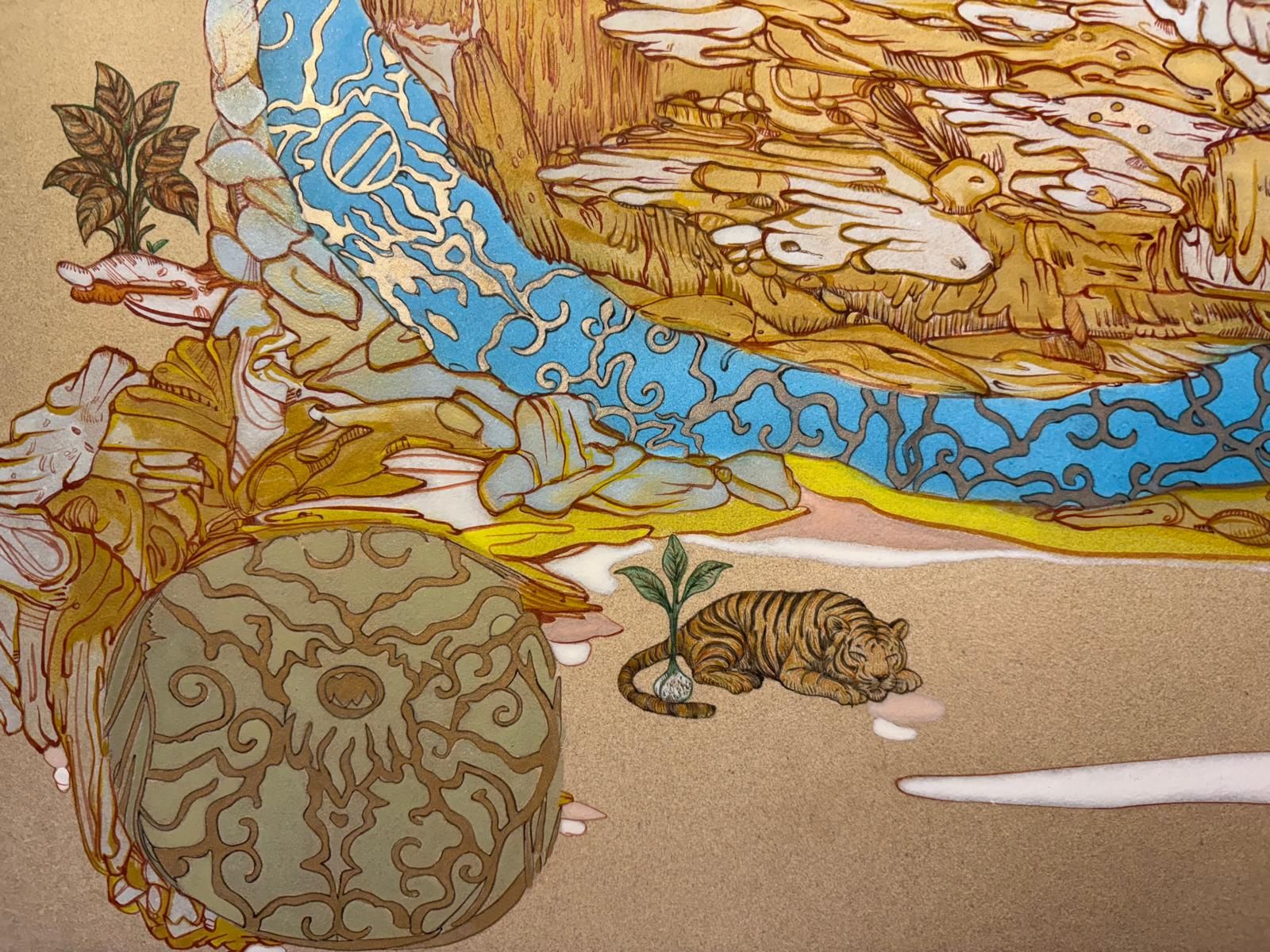
As feminist geography has long asserted, nature, much like the female body, is transformed into an object of control and domination. During the Iran–Iraq War (1980–1988), the Tigris operated as a strategic frontier in military logistics; in the post-2003 occupation and ensuing conflicts, its surrounding territories — particularly around Baghdad — became cartographies of violence. Within this historical-political terrain, the river ceases to be merely a lifeline and instead manifests as a line of conflict. The forced crossing of Alphesiboea acquires a renewed allegorical density: Dionysus’s tiger form mirrors the violence embedded in modern state apparatuses and war machines, while Alphesiboea’s unresisting drift evokes the coerced trajectories of peoples and women whose geographies are shaped — and disciplined — alongside the river. In this light, the myth intimates that the Tigris carries not only the flow of water but also the current of power itself. The river transforms from a mythological body into a political landscape — a silent witness to the cartographies of borders, dams, and warlines.